CFD Analysis of Outdoor Electronic Enclosures
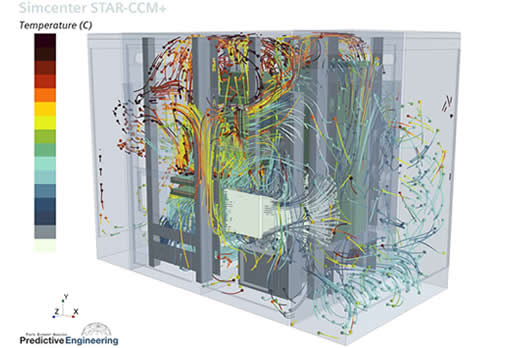
This case study explores how CFD simulations can help ensure adequate cooling and system reliability under such demanding conditions.
Electronic enclosures, especially those used in outdoor telecommunications and internet cabinets, face significant thermal challenges due to internal heat from dense equipment and extreme external temperatures. If not properly cooled, overheating can lead to service outages impacting thousands of users.
Full CFD case study (PDF)
CFD Analysis of Outdoor Electronic Enclosures
Introduction
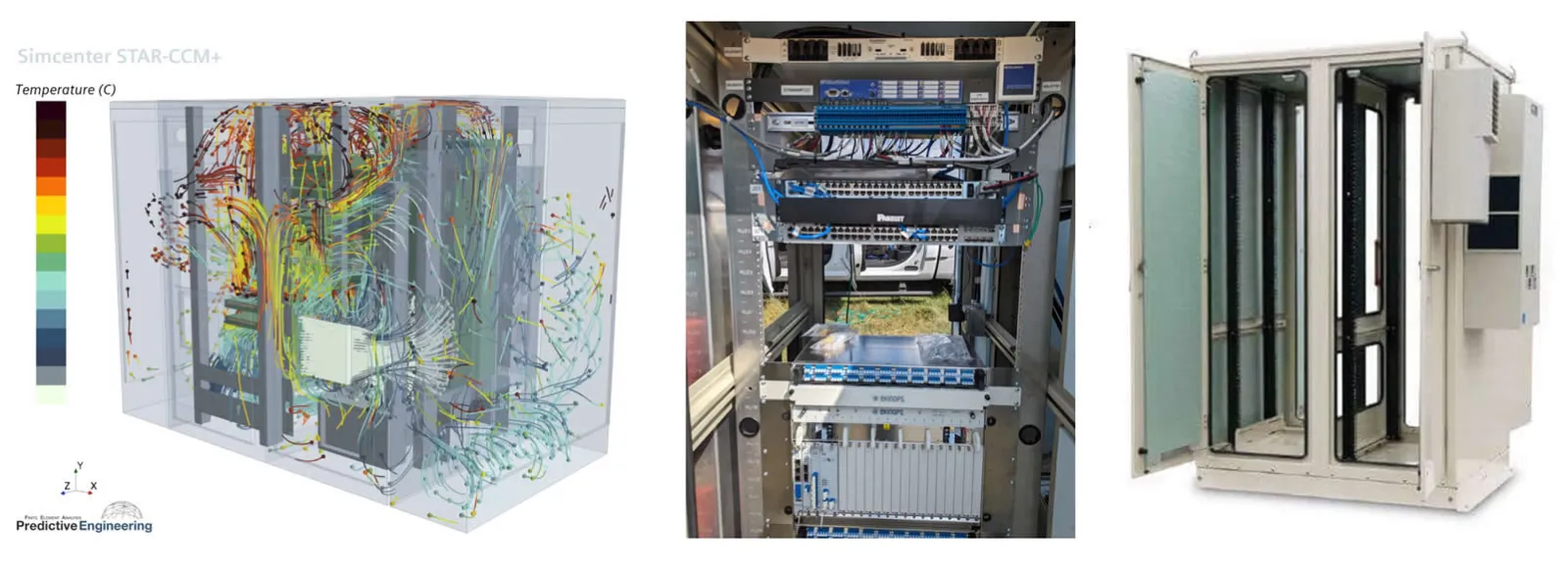
Electronic enclosures are all around us and critical to our modern daily life. The thermal needs for networking internet and telecommunications cabinets are often overlooked. In order to meet ever increasing customer demand for communication speed, these cabinets are packed full of networking routers, power converters, battery backup, and other power dense equipment. You can think of them as mini-data centers. On top of the internal heat production, these cabinets are left outside to bake in the sun and grueling temperatures throughout the country. If the networking components within the cabinet exceed their operating limits, this could mean an internet or communication outage for thousands of customers, which will not reflect well on the service provider.
We have helped clients with upfront CFD simulation studies to ensure these cabinets have adequate cooling to handle extreme conditions, and we have also helped evaluate the failure scenarios where the batteries can maintain the routers, but what’s maintaining the thermal management. In this case study, we’ll discuss some of our techniques for handling these simulations and how we can help with your thermal electronic designs.
Electronic Equipment and Modelling
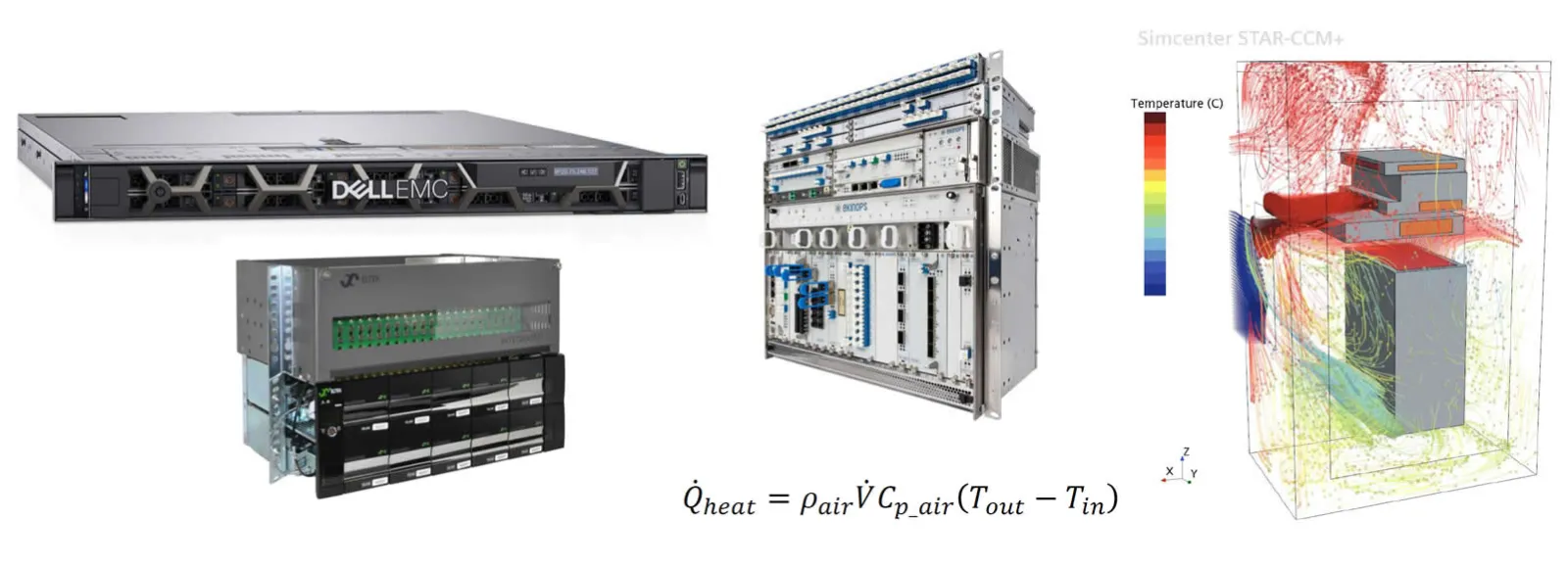
The internal heat generation will come from server racks, power converters, network routers, and other equipment within the cabinet. Typically, door mounted cooling units are installed to keep the inside space cool. Most of these components will have one or more integrated fans to move air through the unit and exhaust the heat. From the datasheets, we will be able to attain a heat load from the device. If we’re lucky, we may even be able to get information on the fan flow rate too, but many times, that is not readily available. In these situations, we can fall back on a 1st Law analysis with engineering assumptions on typical fan flow velocities and system temperature rises to estimate a required fan volumetric flow rate.
At the end of the day, for this level of analysis, it’s important for us to consider how the heat is removed from the devices within the cabinet. How does this heat mix with the incoming cool air, and how does the exhaust heat from one component interact with other units in the cabinet. Your hand calculation for sizing the wall AC unit may show you have enough BTUs, but a detailed CFD analysis will reveal if a single high-power unit is putting others at risk.
Exterior Ambient Conditions
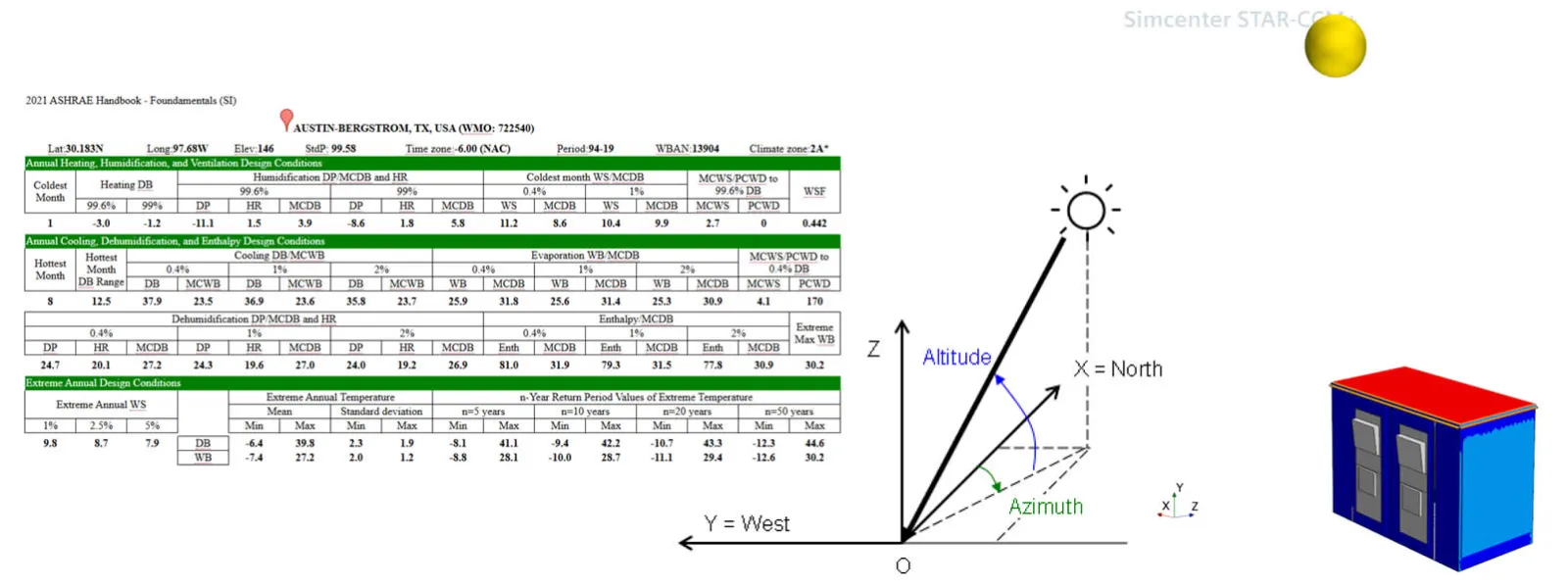
In addition to the internal heat generation from the servers and routers, we must also consider the exterior heat from ambient temperatures and solar radiation. Although these cabinets typically have foam board insulation and solar shields, at the end of the day, they are still a metal box. Extreme outside temperatures can provide additional heat loads that may overload the design AC units for the cabinet. For a particular installation location, we will cross reference ASHRAE climate data for historical extreme temperatures. Our analyses will also include the effects of solar radiation, which can significantly drive up external surface temperatures and provide an additional heat load for internal components. With these techniques, we can accurately simulate the worst-case heating conditions.
Electronics Cabinet for Telecommunications Tower
Our first client was developing a UPS cabinet for a telecommunications tower. This cabinet was loaded with two main bays of equipment including server racks, communication routers, power electronics, and battery backup. The analysis considered extreme ambient temperatures for the location with peak solar radiation at the summer solstice. Our initial analysis showed there was potential for local overheating of specific components due to poor internal flow.
We worked closely with our client and ended up going through a couple design iterations for baffle placement and equipment arrangement to ensure the internal airflow patterns would keep all equipment within the safe operating margins.
Network Cabinet During Power Outage
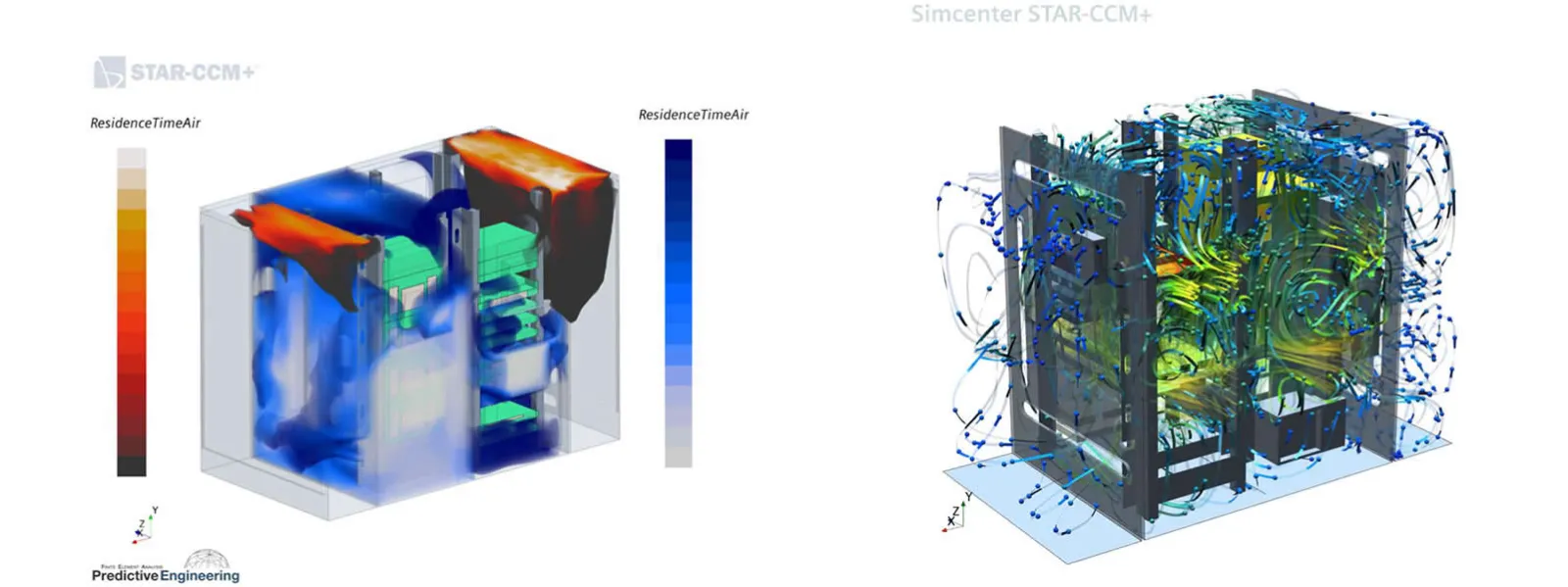
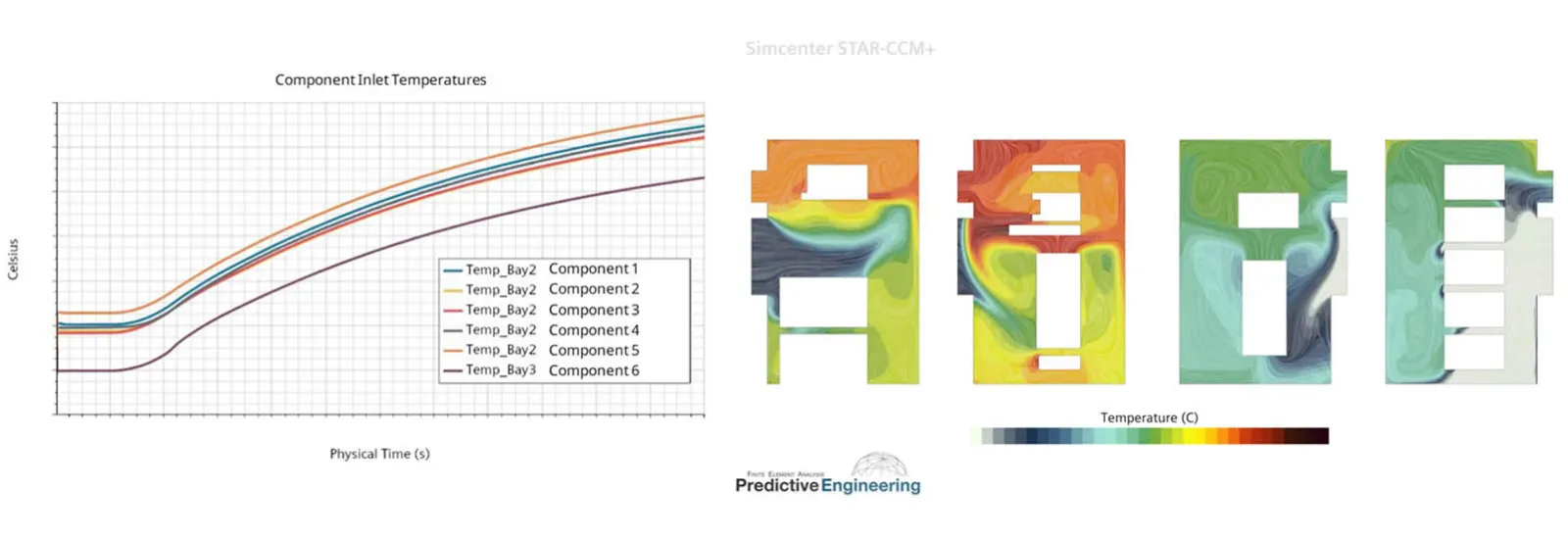
This next case evaluated the performance of a network cabinet during a power outage. Although there was enough on board batteries to power the cabinet for a set period of time, the internal heat load would very quickly exceed operating limits and shut down the cabinet. An interesting challenge here was the cabinet insulation, which normally protects the components from extreme environmental temperatures, but was now trapping all the heat generated inside.
For this application, we were able to select some passive cooling units to install during power outage. The component operating temperatures would increase, but would remain within safe operating limits while the power gets restored. This CFD analysis and design work improved the robustness and reliability of our client's design.
Predictive Engineering FEA and CFD Consulting Services, Portland, OR USA
We welcome your inquiry about how we may digitally prototype your design from mechanical to thermal fluids simulation.