The Hydrogen Economy – Go Green or Go Home
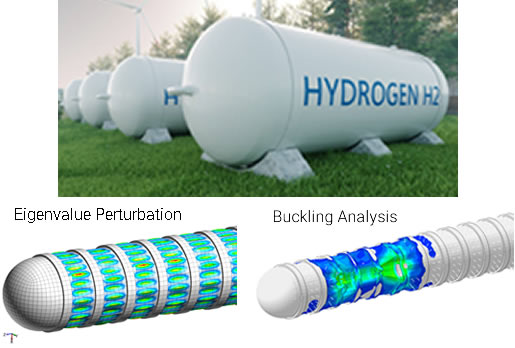
Fracture and Fatigue Analysis
Why Simulation? Get It Right, Know Your Margins, In Service Confidence (Fracture and Fatigue)
The hydrogen economy is coming—not because of social interest or politics, but because of capitalism. Hydrogen is abundant, widely available, and an energy carrier whose combustion product is simply water. More importantly, hydrogen enables energy-to-energy conversion: energy can be used to produce hydrogen, and hydrogen can then be converted back into energy.
When surplus energy exists (from solar, wind, or future fusion systems), it can be converted into hydrogen and later used to power vehicles or systems where batteries are not efficient. Hydrogen has a vastly superior gravimetric (mass-based) energy density, offering over 50 times more energy per kilogram than even the most advanced solid-state lithium-ion batteries forecast to arrive around 2030. This fundamental advantage is what is driving the hydrogen economy.
At its core, this is about energy efficiency, and Predictive is helping turn that efficiency into an engineering reality. This short note highlights our engineering consulting services related to hydrogen systems, including energy conversion, storage, and transportation.
Full ASME case study (PDF)
The Hydrogen Economy Go Green or Go Home - Predictive Engineering
Some of the First Steps Toward the Hydrogen Economy
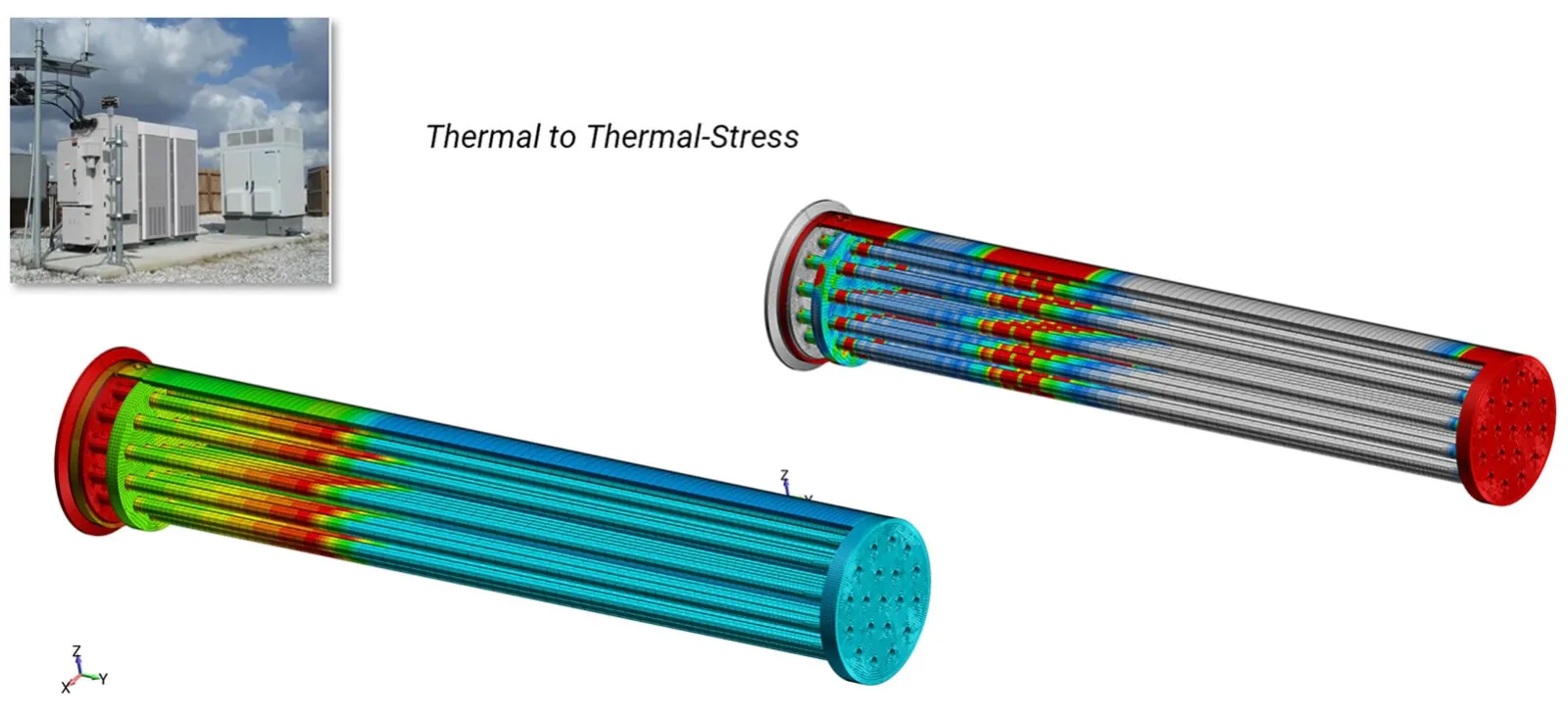
Hydrogen Fuel Cell Thermal-Stress Analysis
The ability to generate hydrogen from water or other fuel sources (e.g., methane) provides one of the great flexibilities of the hydrogen to generate energy from energy. Our work at Predictive was to verify the thermal-stress of the fuel cell and perform detailed weld-fatigue calculations at the connections. More can be found on this subject at PredictiveEngineering.com
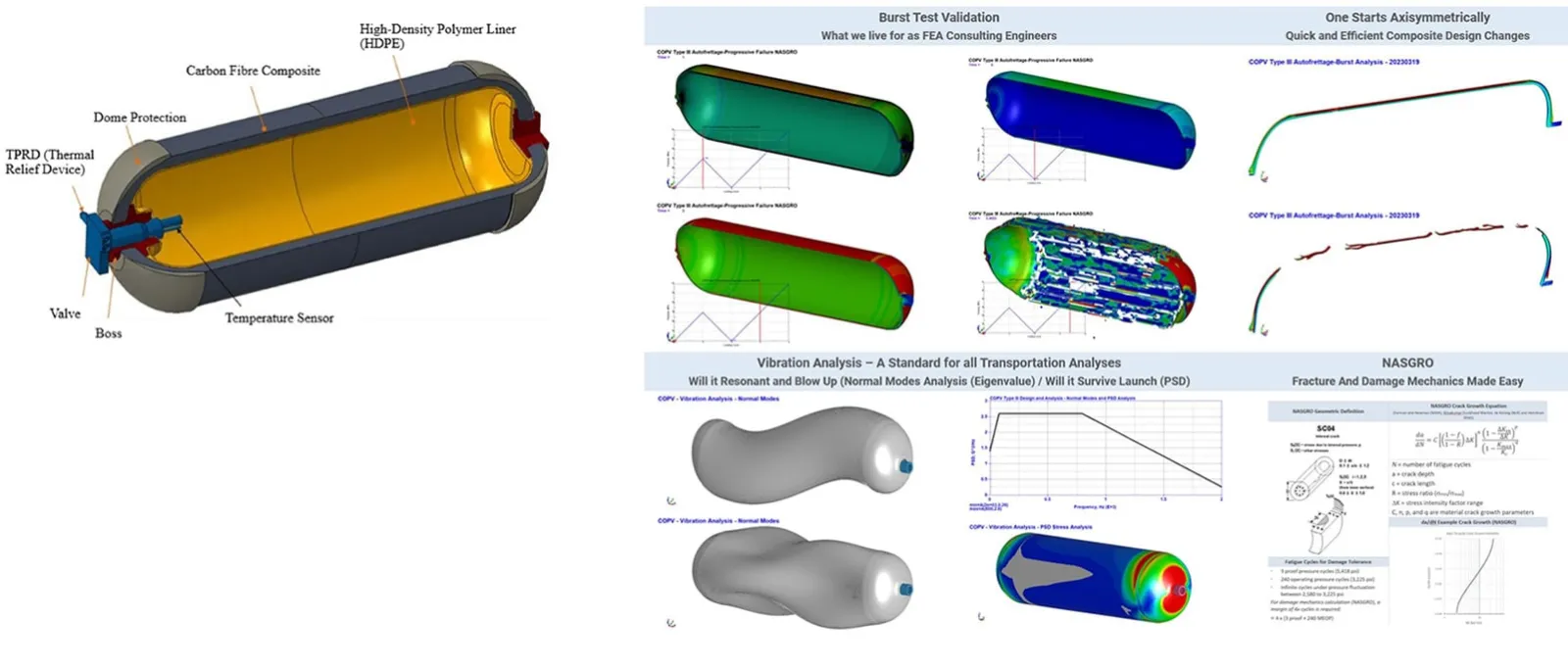
Efficient Methods for Storing Hydrogen for Aviation, Space, Marine and Automotive
Composite Overwrapped Pressure Vessels (COPV) Type IV has solved one of the fundamental problems with hydrogen storage due to their lightweight and if failure occurs, it is a gentle process of fiber failure rather than an instantaneous burst. Simulation work at Predictive showed that our clients COPV Type IV was well designed and met their end-client’s burst test requirements. Test data validated our analysis results to a near perfect match from initial loading to final failure. Additional information can be found at PredictiveEngineering.com
Transporting Hydrogen: Rail Transportation Frame – ISO 1496-3, Part 5
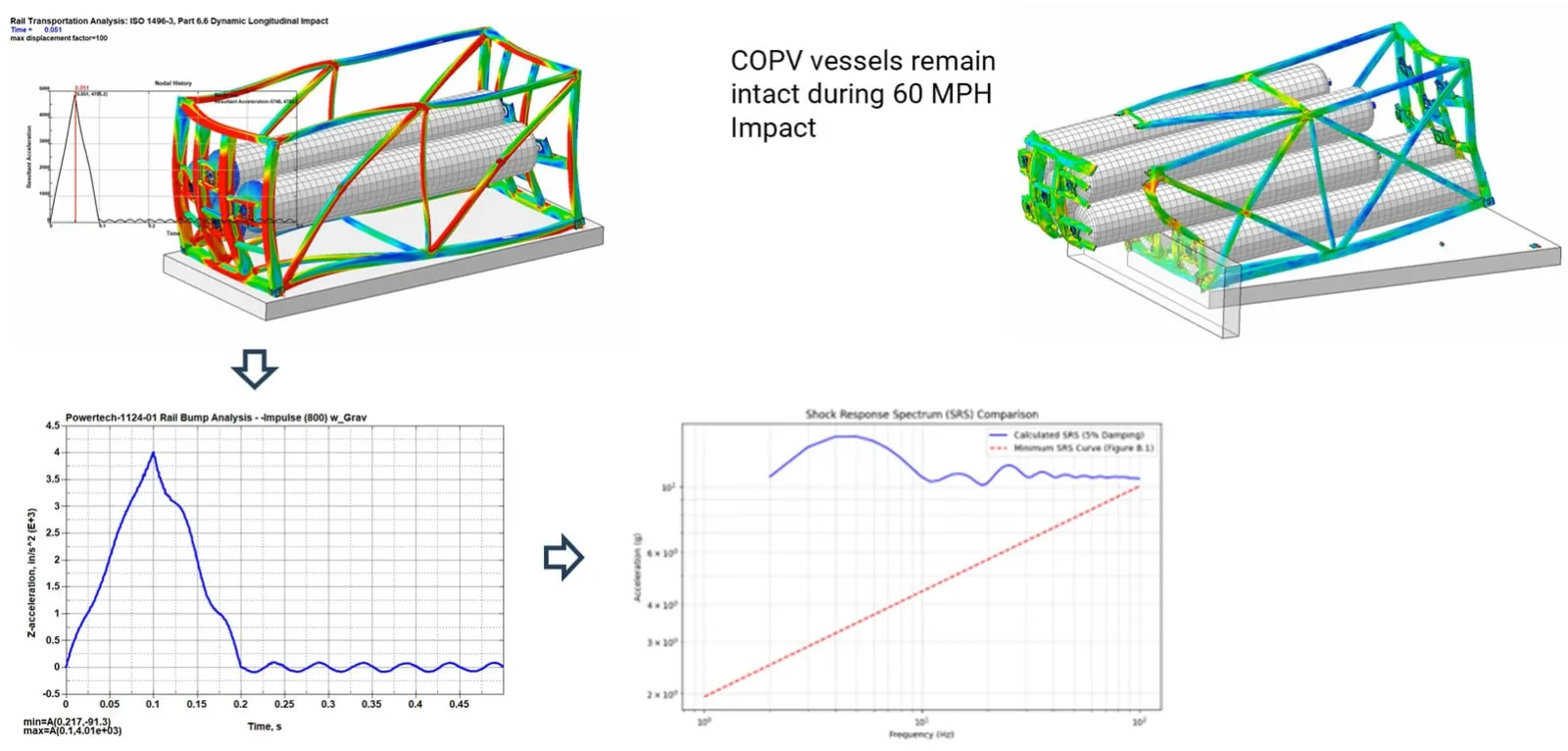
Impact analysis of rail transportation frame for hydrogen COPV type IV vessels per ISO 1496-3, Part 5. This specification requires that the frame has a SRS vibration response higher than a set curve. This requirement is met by taking the frame acceleration and converting it to a SRS response. Our client’s frame passed with no problem.
Safe Storge of Hydrogen – Deep Burial While Meeting ASME VIII.2, Part 5
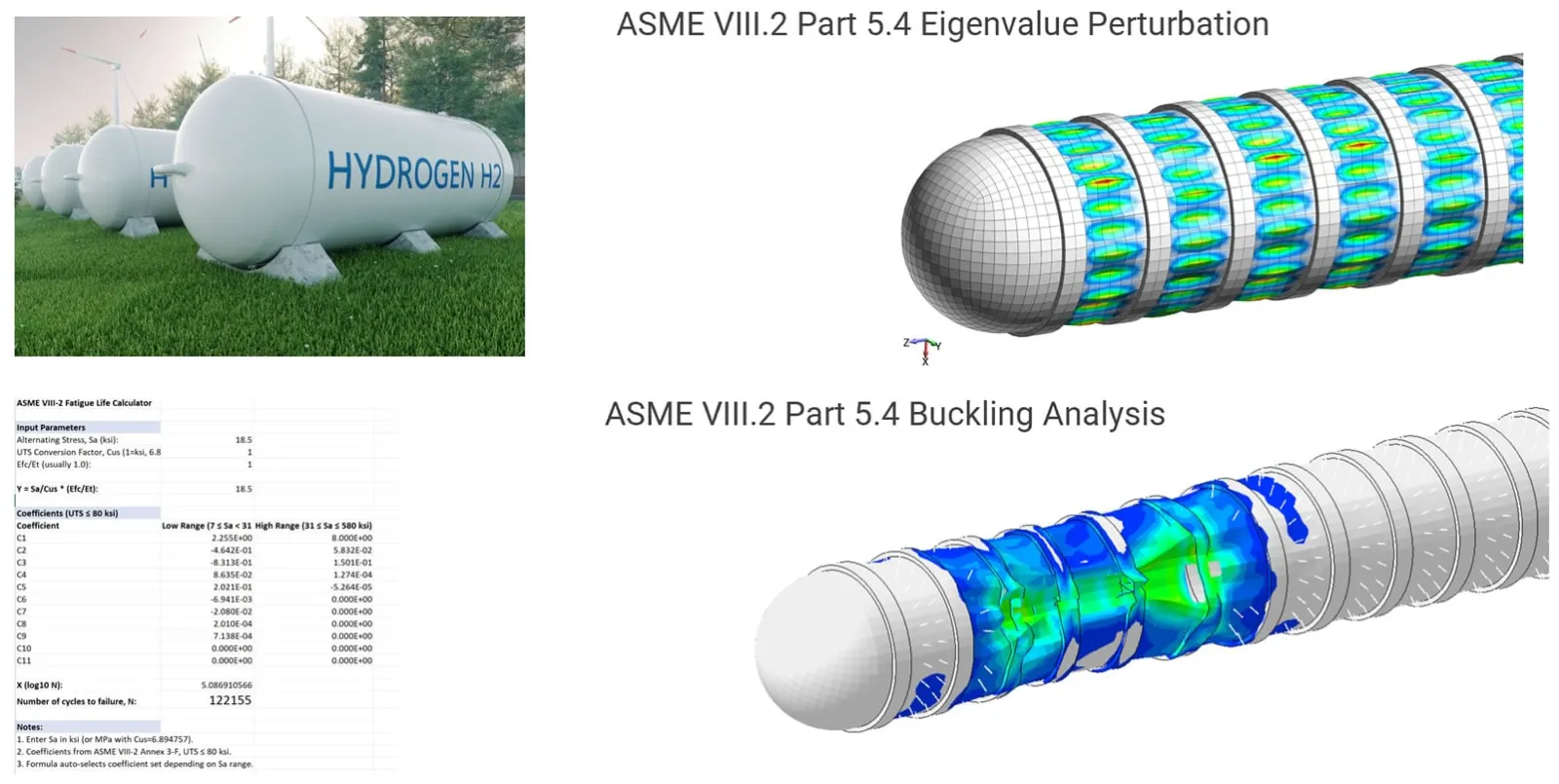
An innovative approach to hydrogen storage is to place the storage vessel deep underground and use the surrounding rock to support the vessel’s high storage pressure. Predictive’s work was to provide a comprehensive ASME Section VIII, Division 2, Part 5 verification of the vessel’s design from surrounding rock geology to grouting methods.
Predictive Engineering’s Broad Experience with Metals, Composites and Ceramics
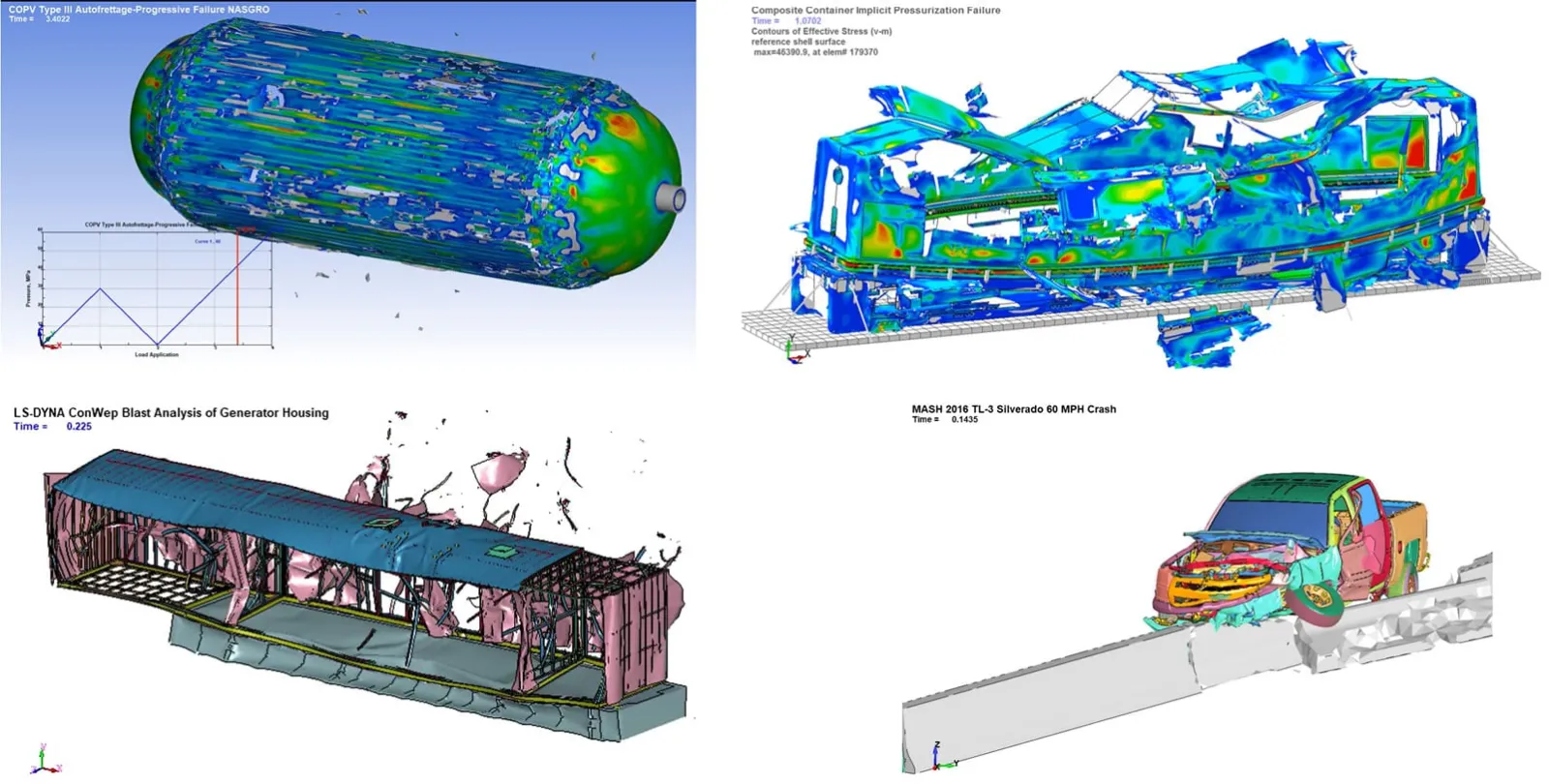
Validated experience with composites, plastics, polymers and metals under explosive (ConWep) and Pressurized Burst Conditions. Material experts in ceramics, metals, engineered composites (polymeric and cement) – see Predictive Engineering Consulting Services for more stories.
Predictive Engineering – The Advantage of Getting it Right the First Time