Nonlinear FEA at Predictive Engineering 2026 Retrospective
This was the year of the AI boom and although a bit scary at times, it proved to be great assistant to speed our work along. Before I dive into what I mean about being an assistant, let me give you a quick little background on what I define as nonlinear FEA since it is like art, and its beauty is in the eye of the beholder. Most all engineering analysis (95%) is linear (which includes all the vib stuff – normal modes, response spectrum (seismic) and PSD) and that is the way it should be – fast, efficient and good enough - since engineering is about getting the job done, under budget and on schedule. Only with some trepidation, should one consider complicating an analysis with nonlinear effects. That is, to say, it is always easy to make a simulation complicated and always quite difficult to make it simple, which leads to this quote, “elegant simplicity is deceptively difficult to achieve”.
Now, let’s talk about the AI crutch. Threading the needle on how to idealize a structure for linear analysis is well within the realm of today’s AI agents but how to advance that simulation to capture nonlinear effects leads to a quagmire of physics that will run the unsuspecting simulation engineer around in circles. Our experience this year is that AI is a great assistant for creating nonlinear material models from the literature and formatting these models correctly for our analysis engines (aka Simcenter Nastran and LS-DYNA). It is also quite good for reviewing the models and finding logic flaws; however, it does require an experienced simulation engineer to judge what is worthwhile and what is just nit-picking.
Enough blogging, I want to present five nonlinear FEA projects that we did in 2026 that cover an interesting range of engineering structures: 1.) Drop test of skid mounted heat exchanger; 2.) Blast loaded composite wall system reinforced with tensioned cables; 3.) Impact analysis of COPV transportation frame; 4.) ASME Buckling analysis of buried hydrogen storage vessel; and 5.) Transient dynamic nonlinear analysis of vibratory screen. All these simulations benefited from the use of AI and can be credited with cutting down the normal analysis project time by 20 to 50%.
Drop Test of Skid-Mounted Heat Exchanger
The FEA model is given an initial velocity and then immediately impacts a rigid surface. The analysis is run using the nonlinear transient dynamic implicit method.
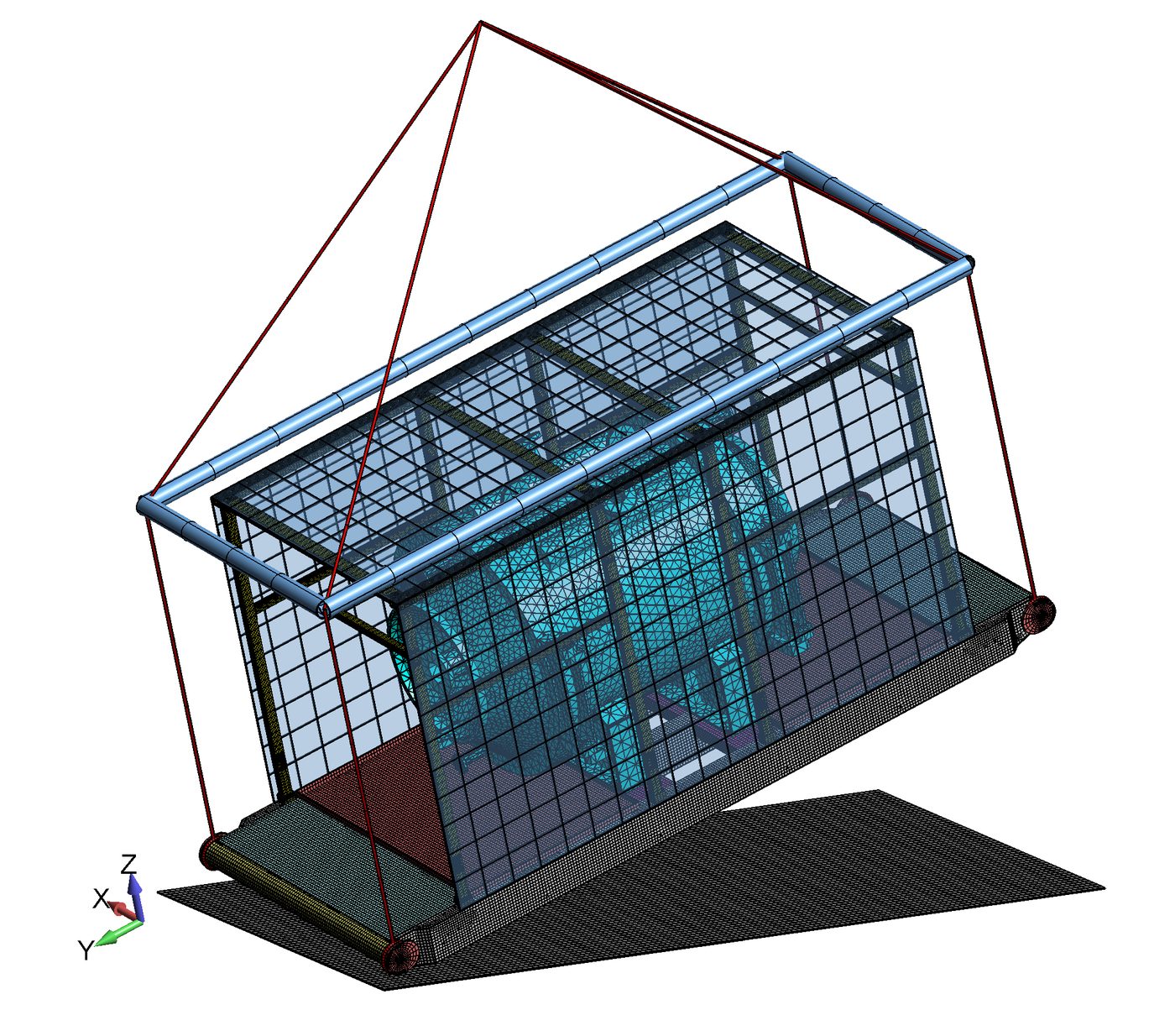
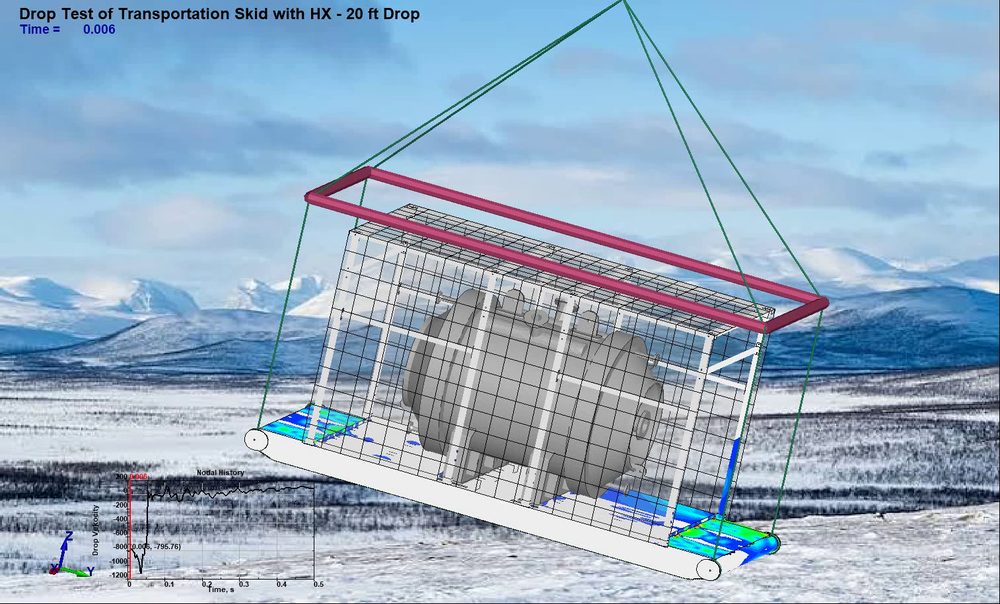
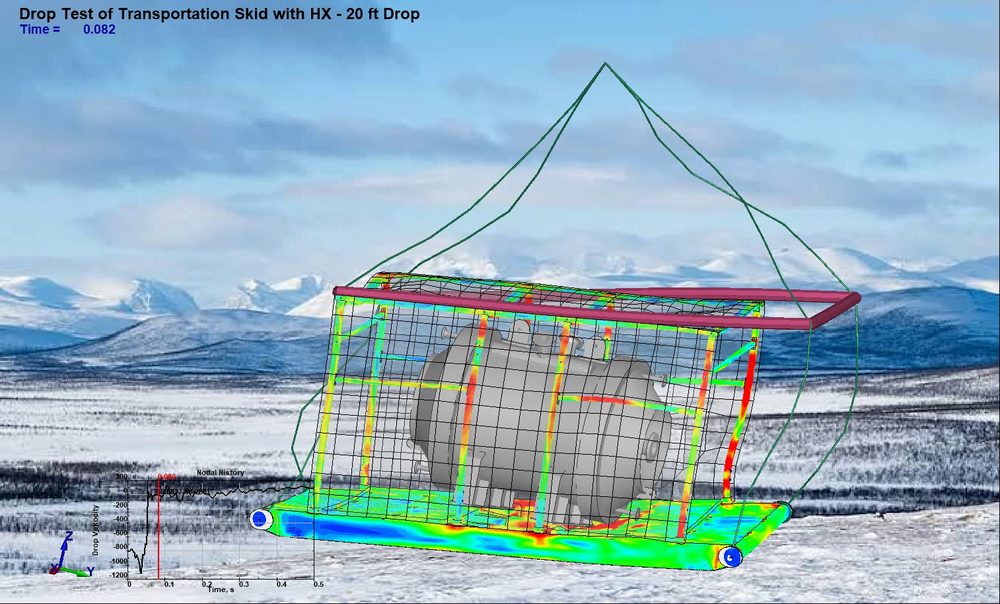
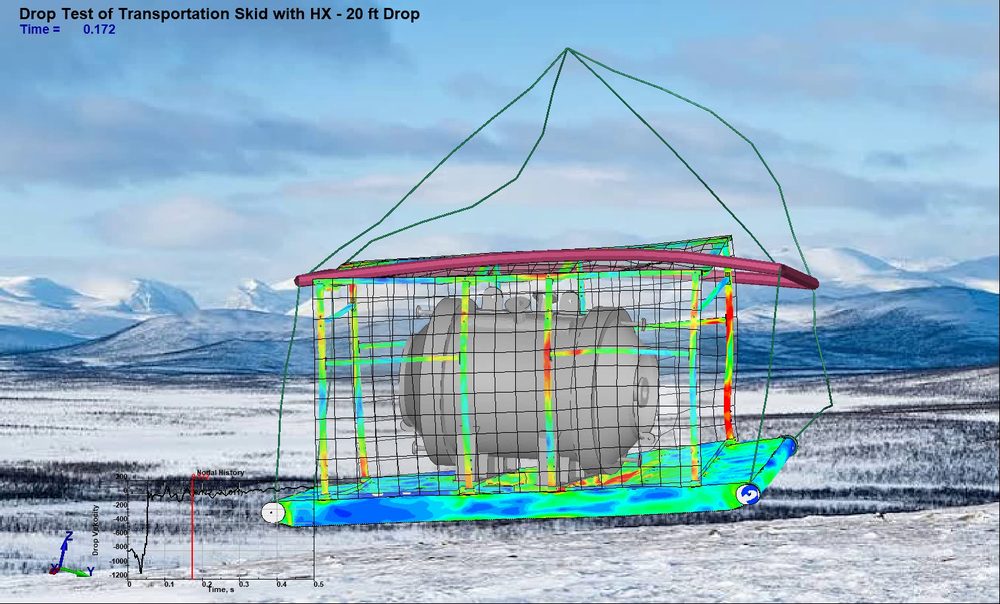
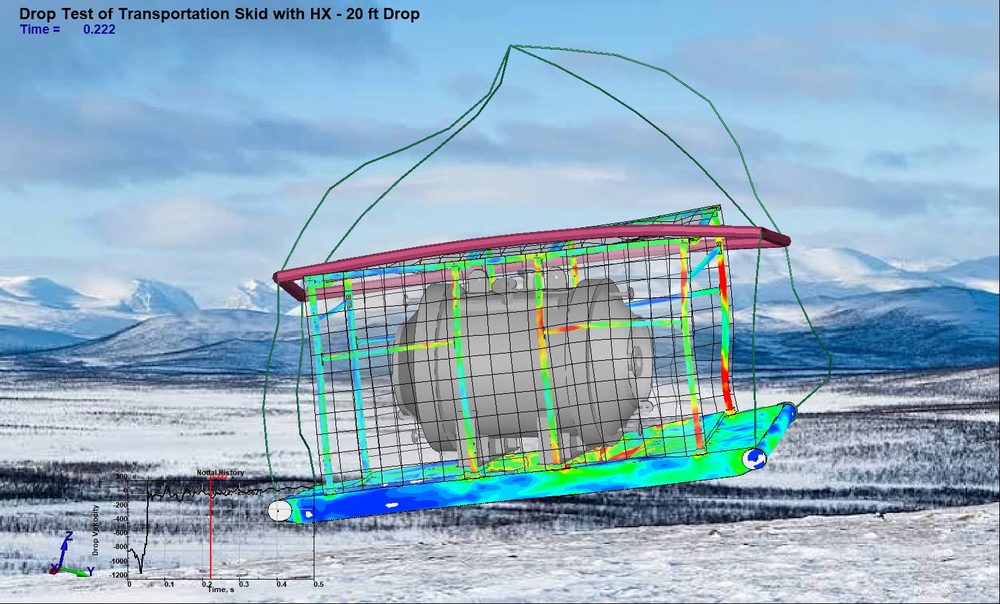
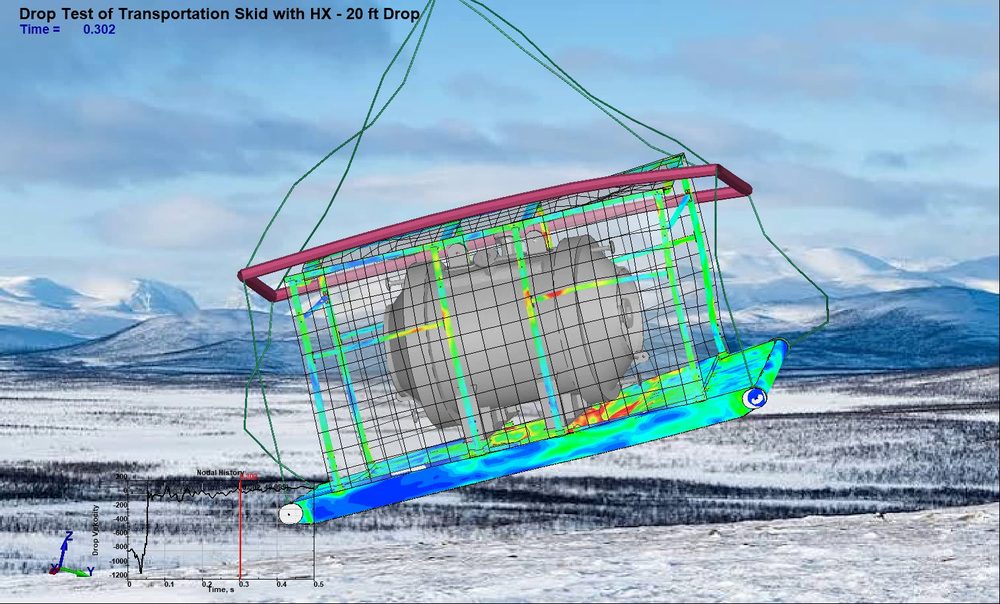
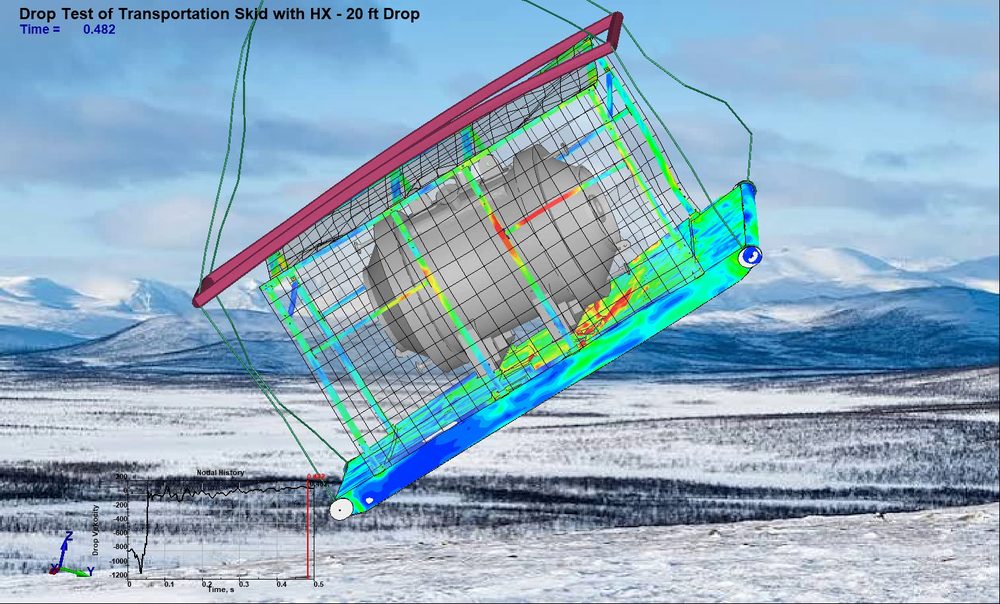
Predictive Engineering’s nonlinear FEA consultants have direct experience with drop test codes such as; IEC 60068-2-31 (general equipment), MIL-STD-810H (military and rugged equipment), ASTM D5276-19 (shipping containers), 10 CFR 71.73 (radioactive material packages), IEC 62368-1 (electronics) and IEC 60601-1 (medical equipment).
Blast Loaded Composite Wall System
The composite material properties for the wall panels were obtained from the manufacturers literature and then verified analytically and then with small FEA models.
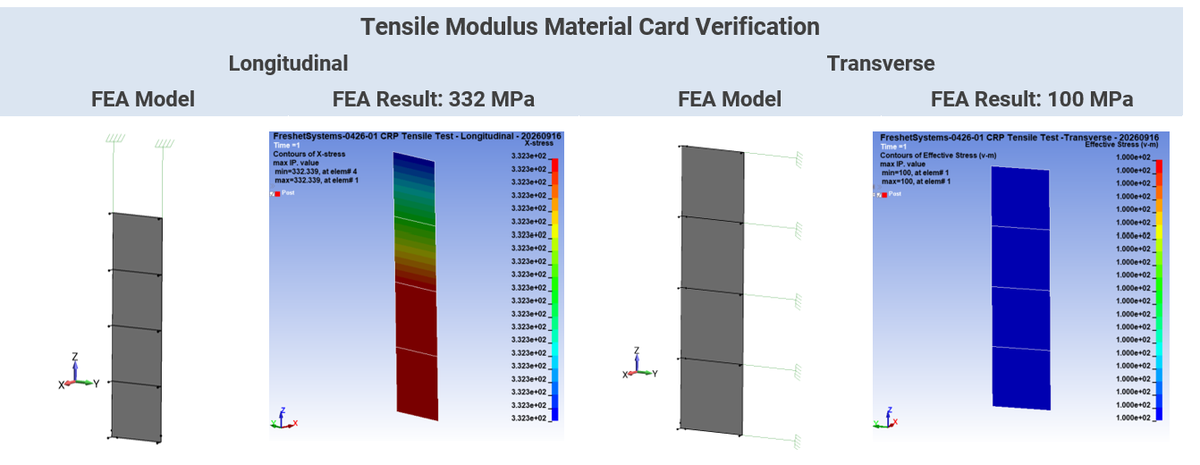
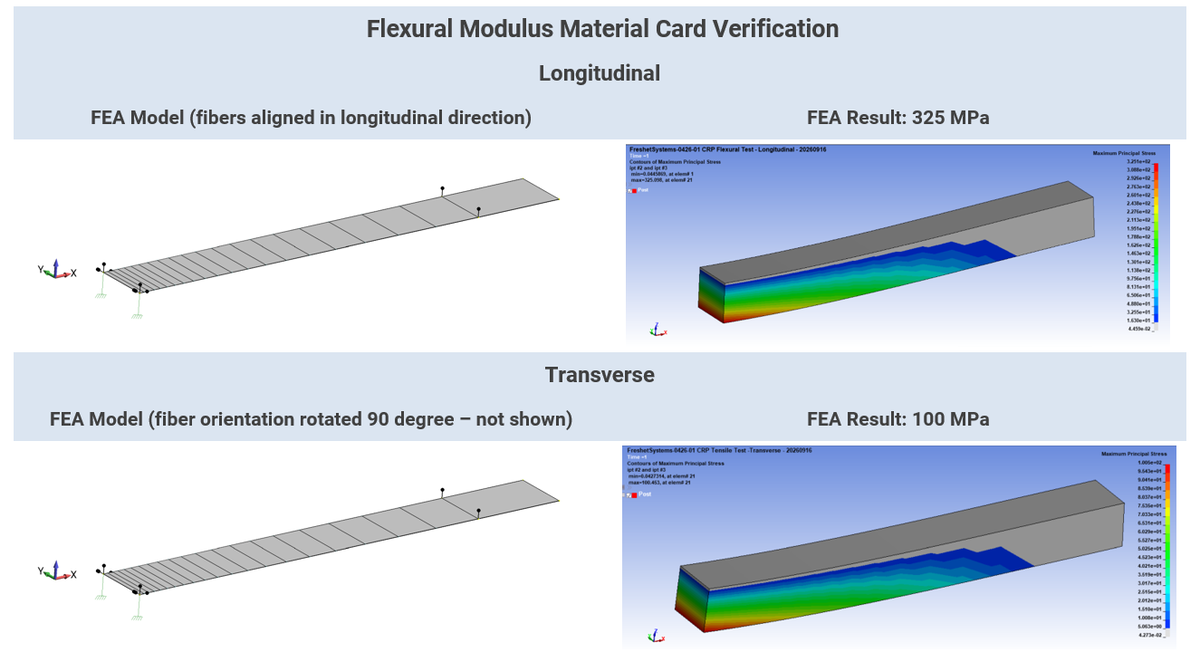
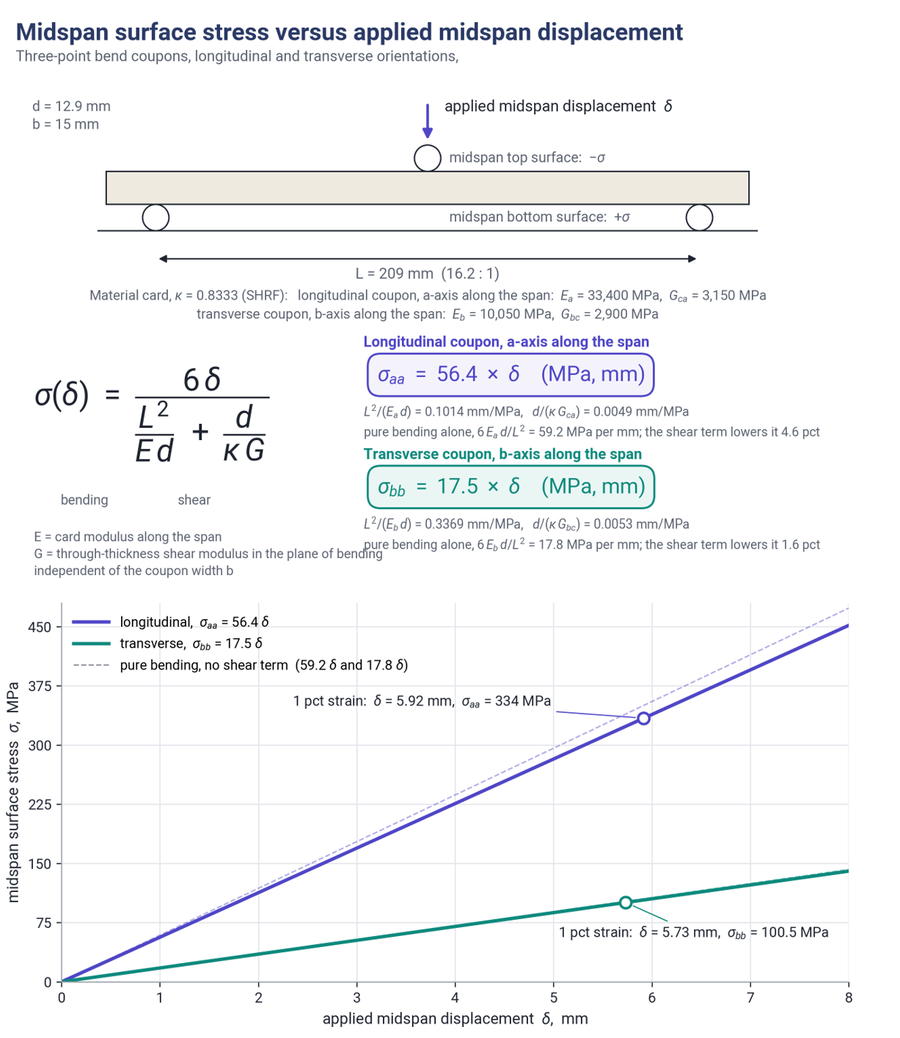
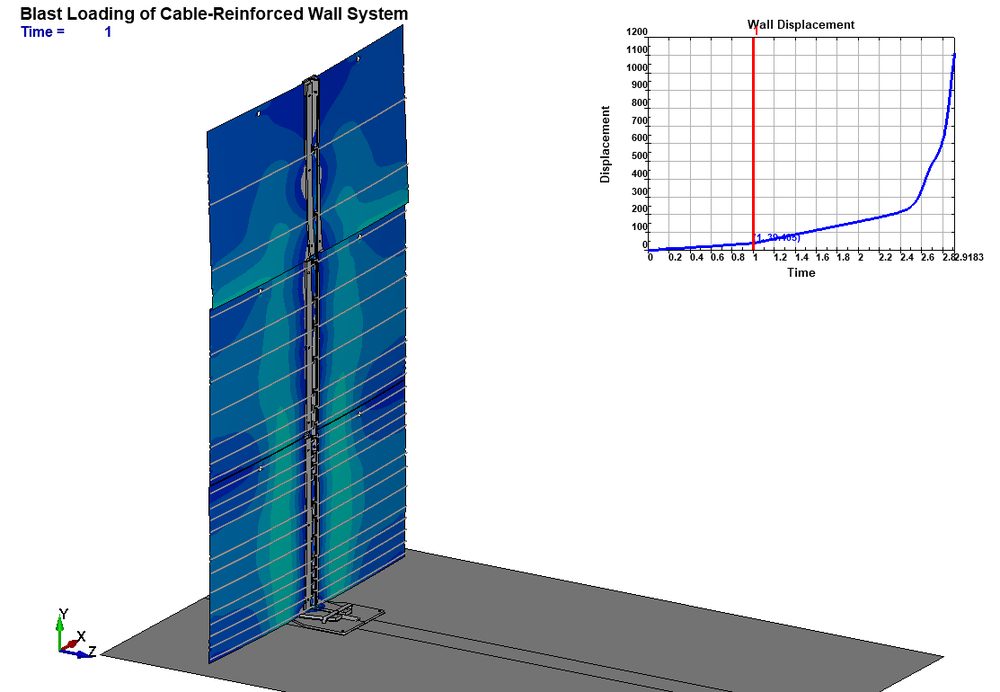
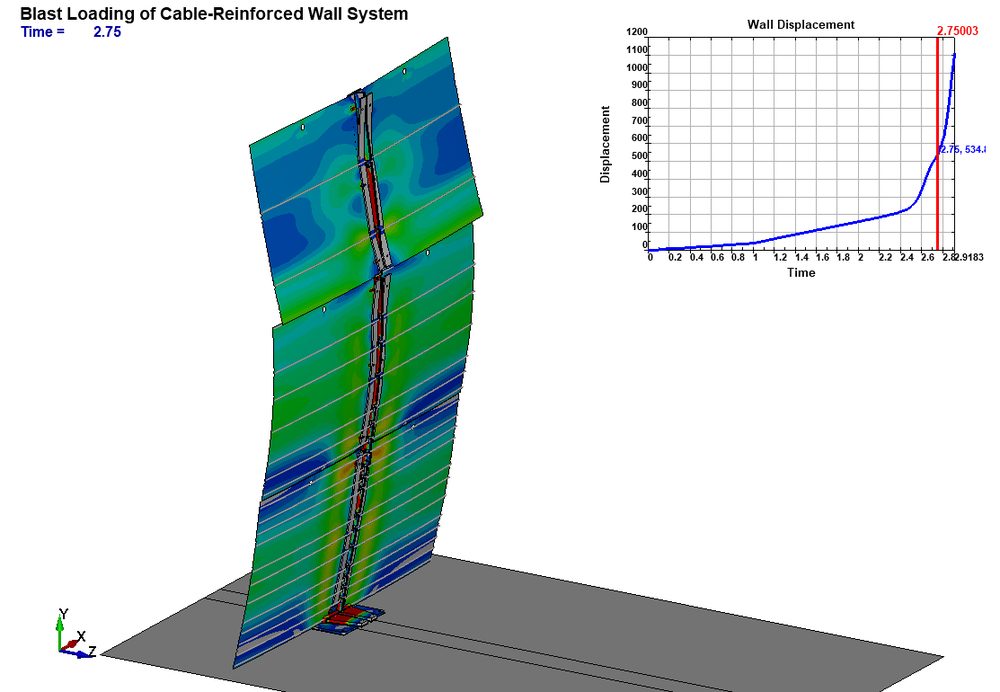
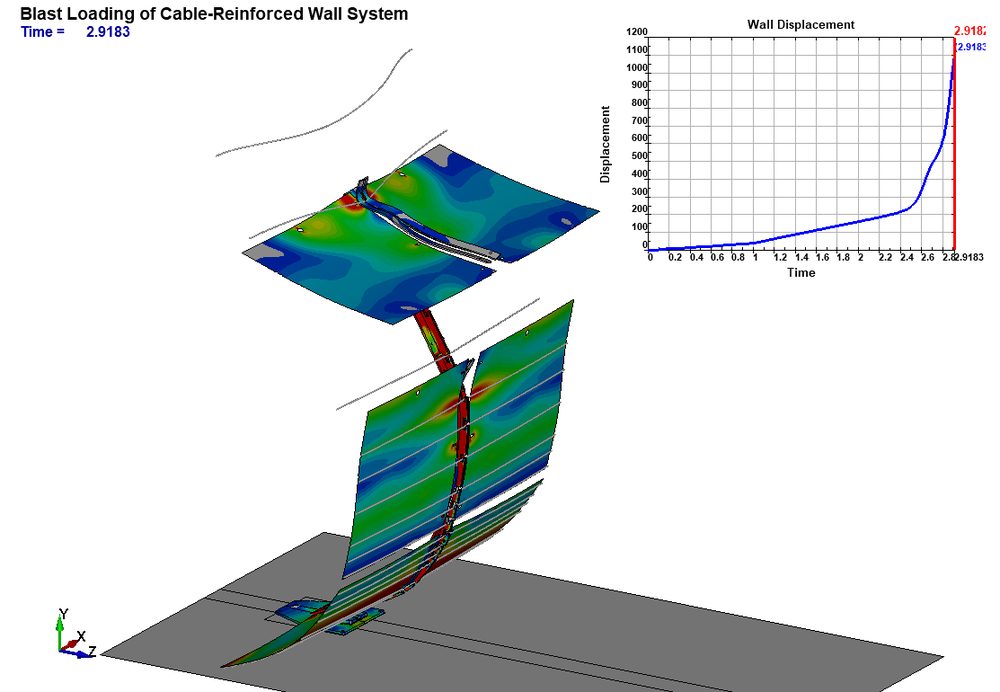
The composite panels were reinforced using a tensioned cable system. As the panels were loaded, the cables prevented the wall from buckling. This model was run as a fully nonlinear transient dynamic implicit analysis. If this topic is of interest, please see: A Roadmap to Linear and Nonlinear Implicit Analysis.
Rail Transportation Analysis of Hydrogen COPV
This work was reported in a blog: Predictive Engineering Vibration Analysis Fundamentals
What wasn’t covered was the impact analysis work. As in prior work, everything was done within LS-DYNA as a nonlinear transient, dynamic analysis.
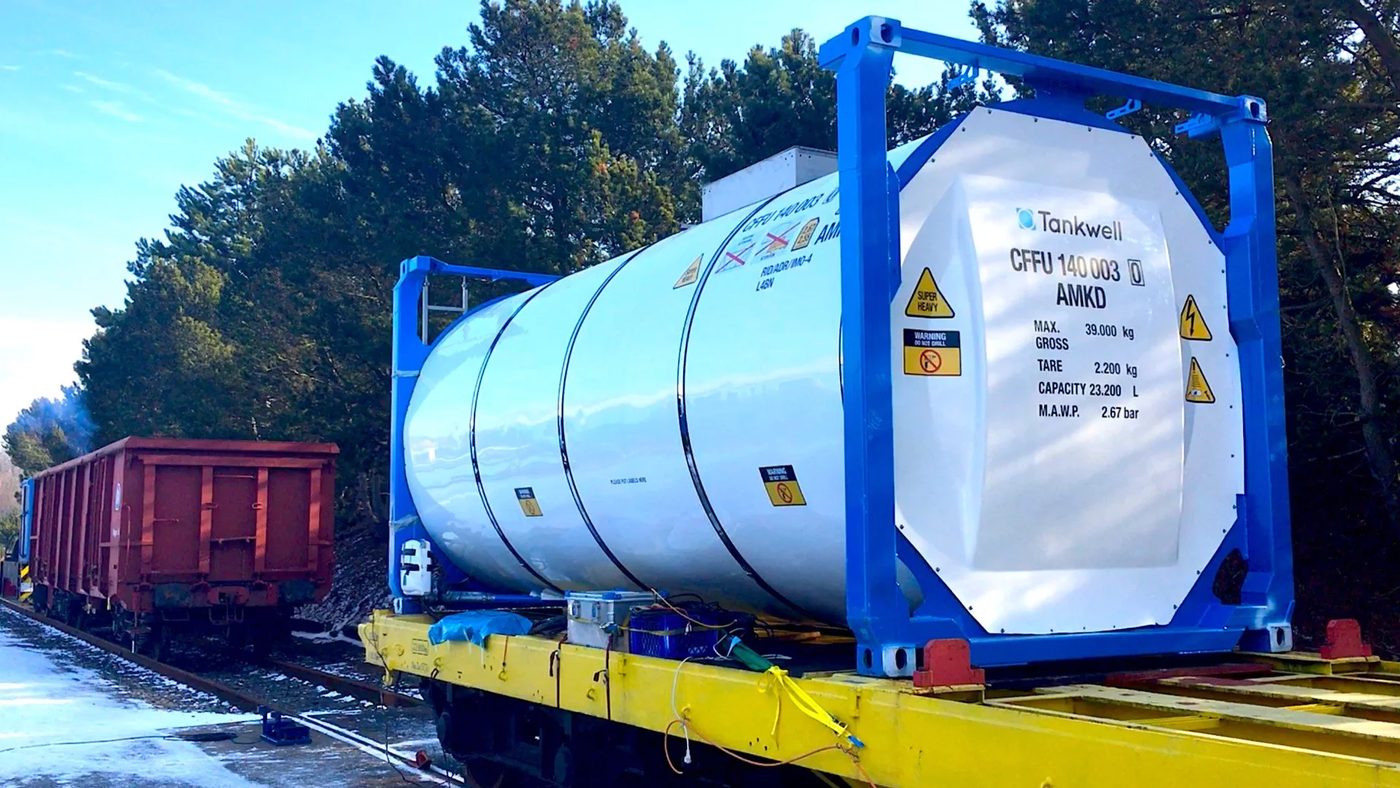
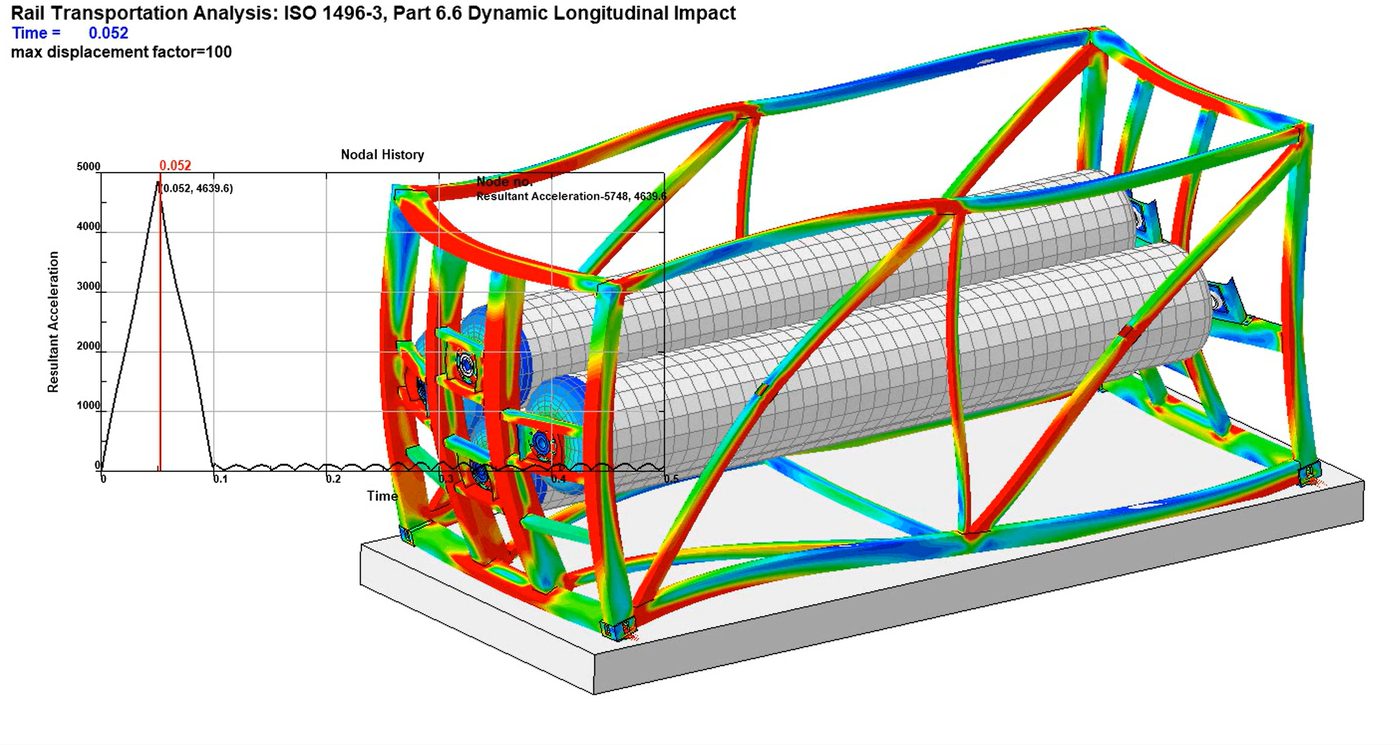
Impact at 60 MPH
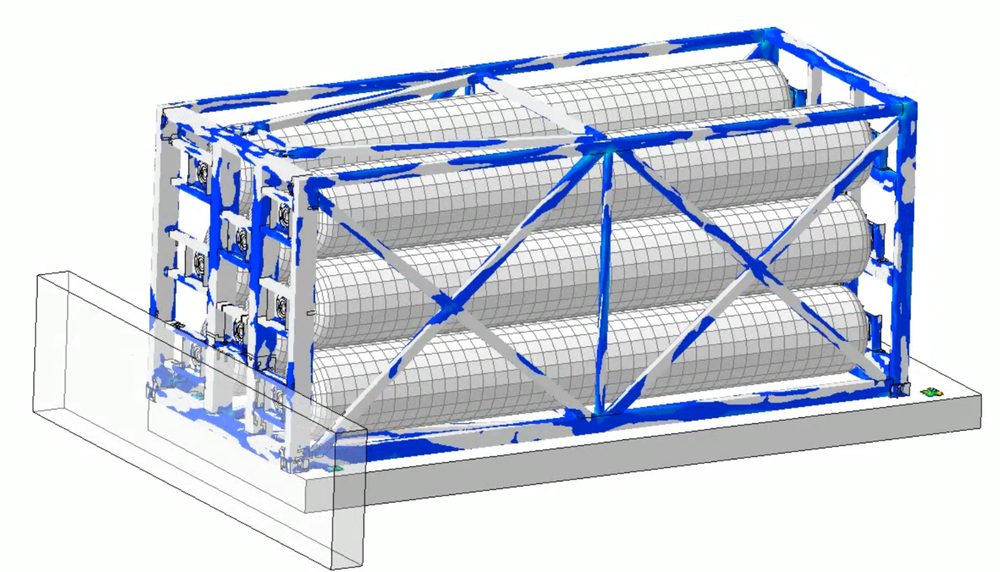
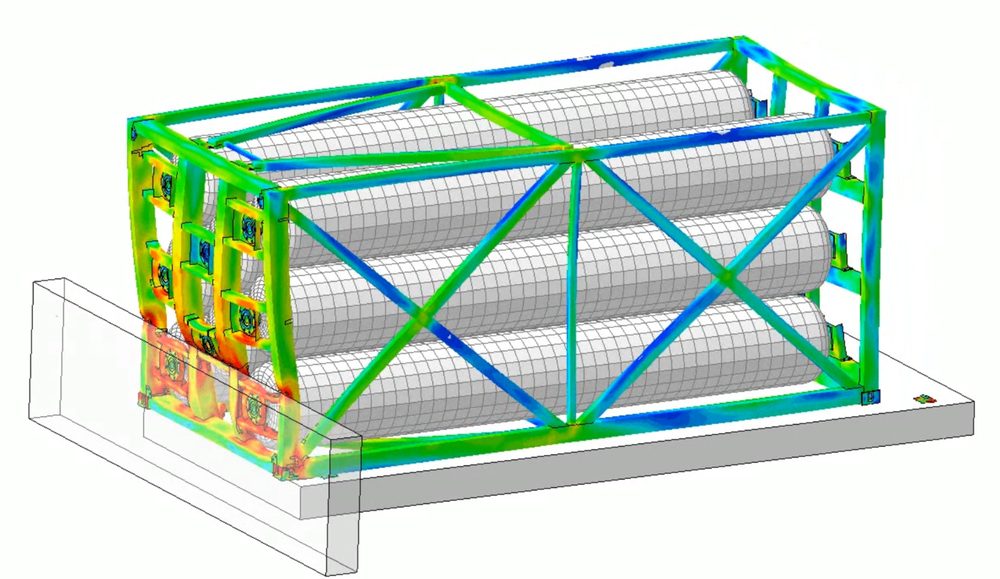
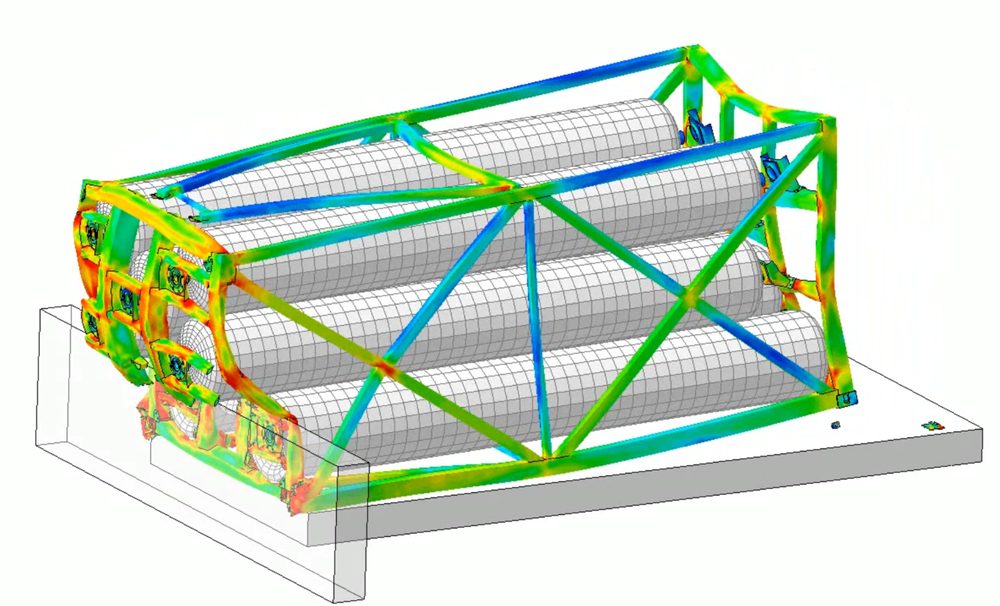
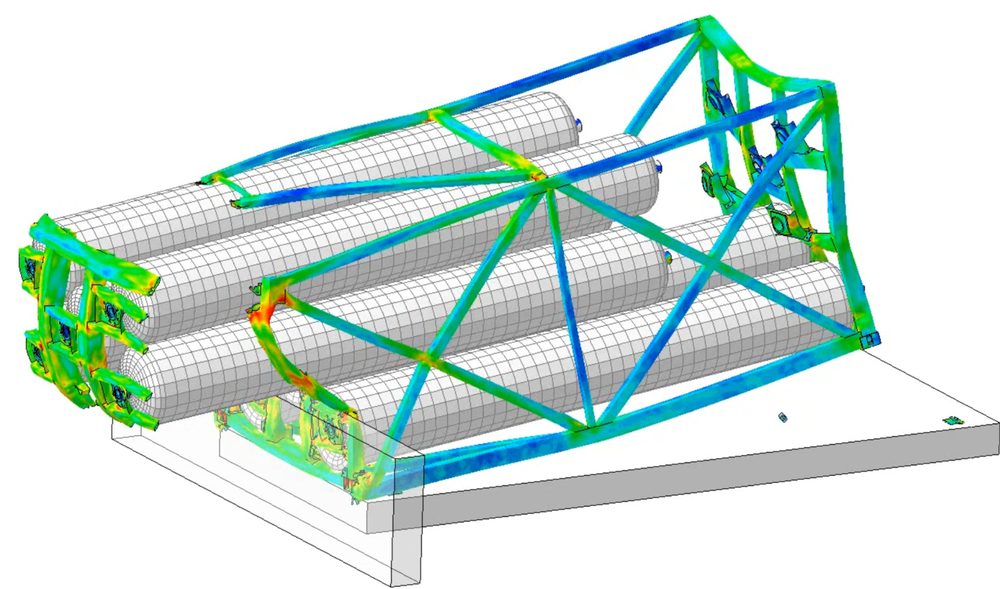
At Predictive Engineering, we also offer FEA consulting services with code experience on: ISO 1496-3; MIL-STD-810; Method 526, Rail Impact; 49 CFR Part 179; EN 15227 and IEC 61373:2026 (shock and vibration of equipment on rolling stock).
ASME Buckling Analysis of Deep-Earth Buried Hydrogen Storage Vessel
The concept for this project was to bury the vessel 600 ft underground and use the surrounding rock to reinforce the large-diameter vessel. Predictive was responsible to certify the vessel for ASME service from static loading to nonlinear buckling from ground water pressure.
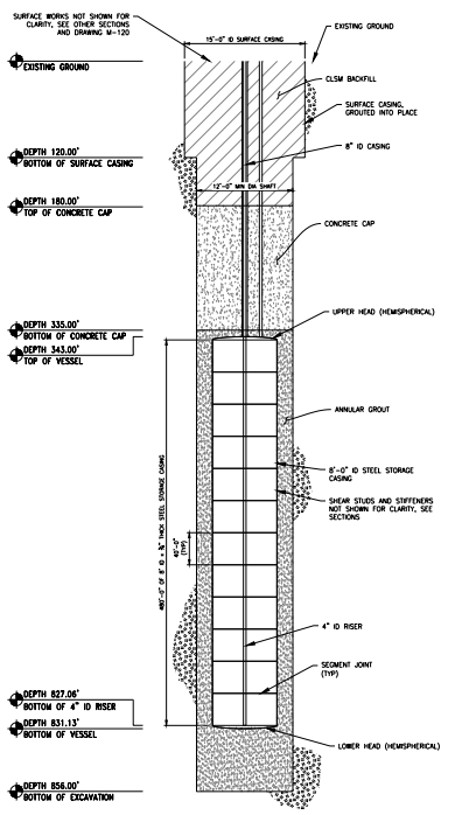
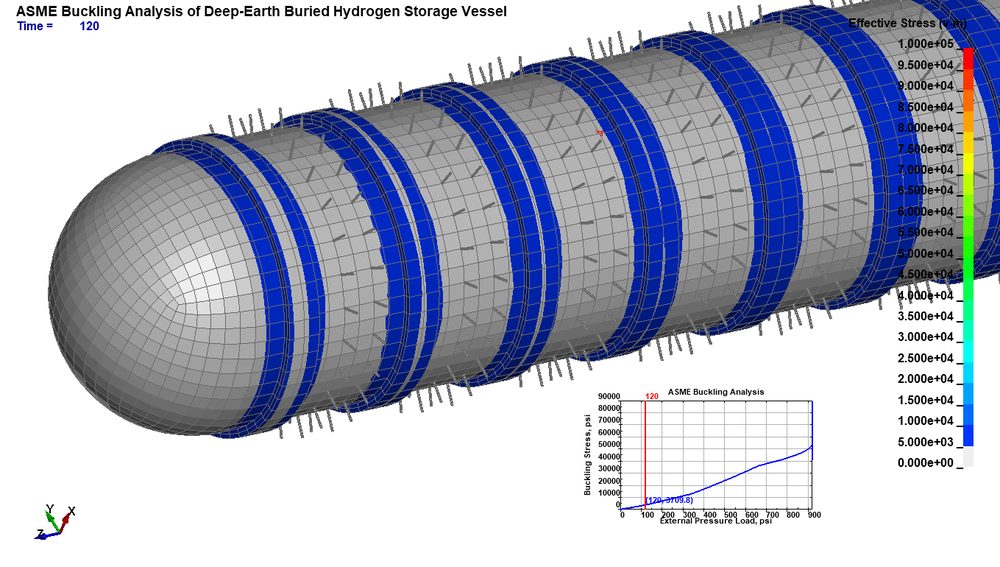
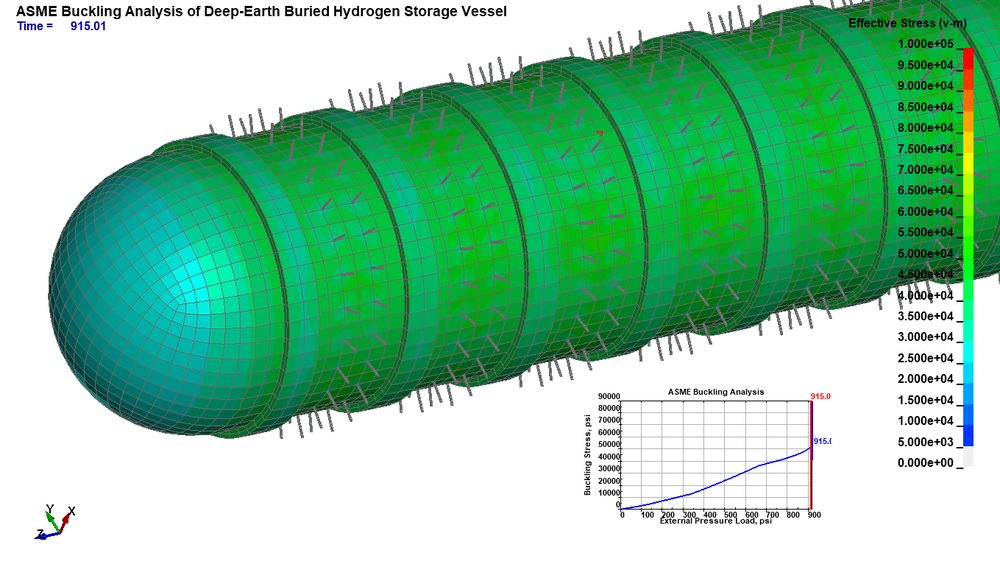
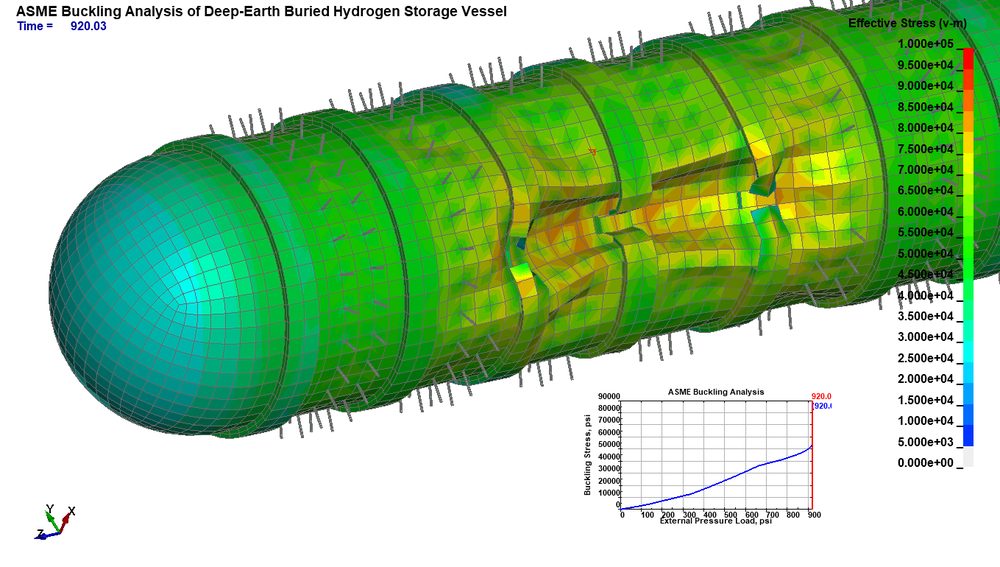
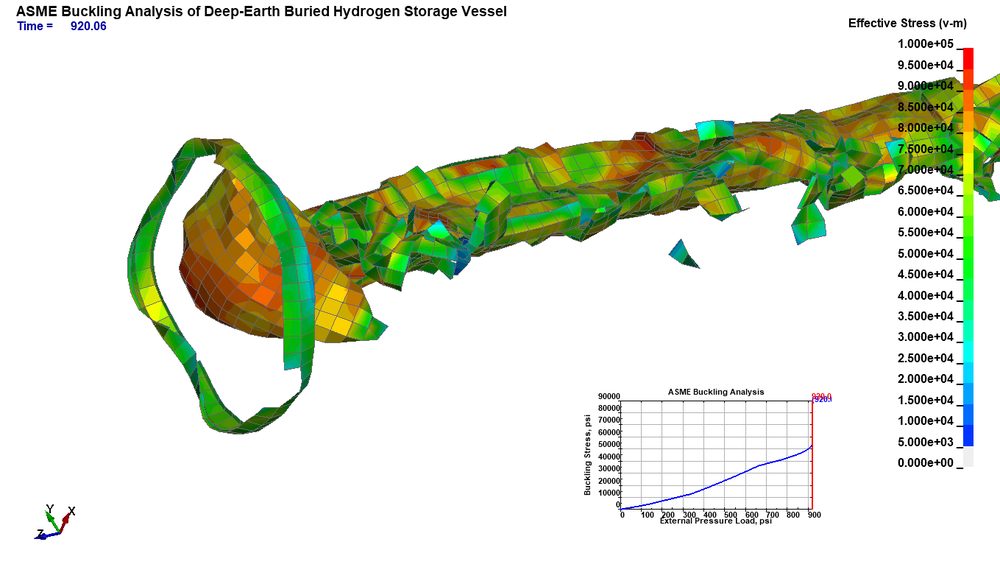
Predictive Engineering has decades of experience with applying the ASME Section VIII, Division 2, Part 5.4 (eigenvalue perturbation) and Part 5.4 linear and nonlinear buckling. Our work has also extended from submarines to earth-based pressure vessels to space launch hardware.
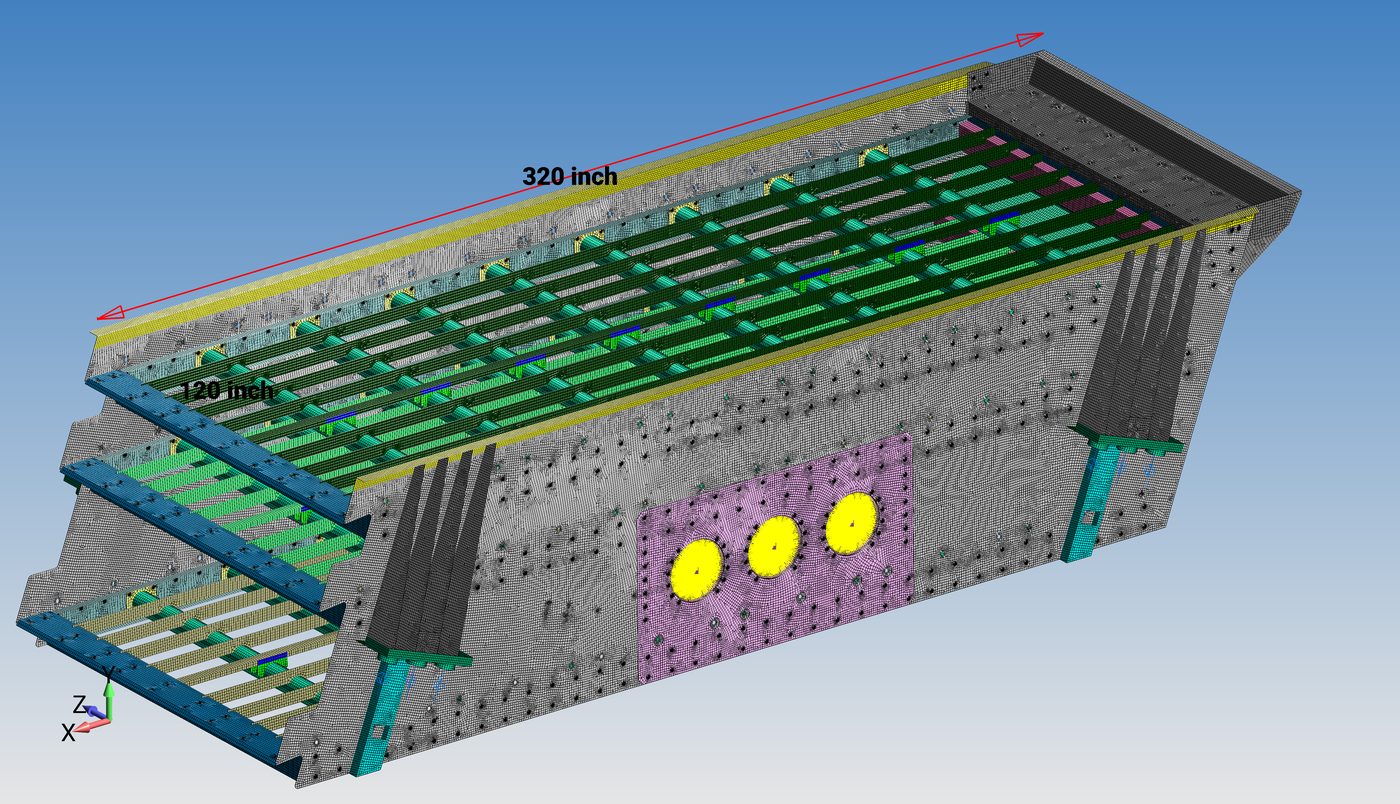
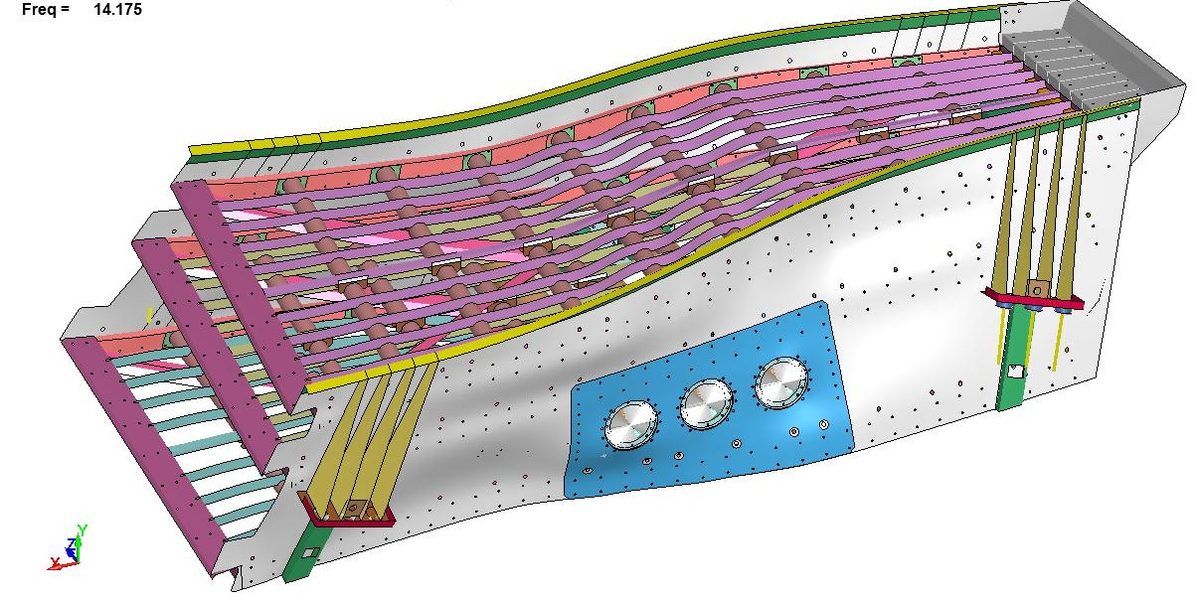
Nonlinear Transient Dynamic Vibration Analysis of Vibratory Screen
FEA Model of Vibratory Screen:
Eigenvalue (Normal Modes) Analysis:
Nonlinear Transient Dynamic Stress Results:
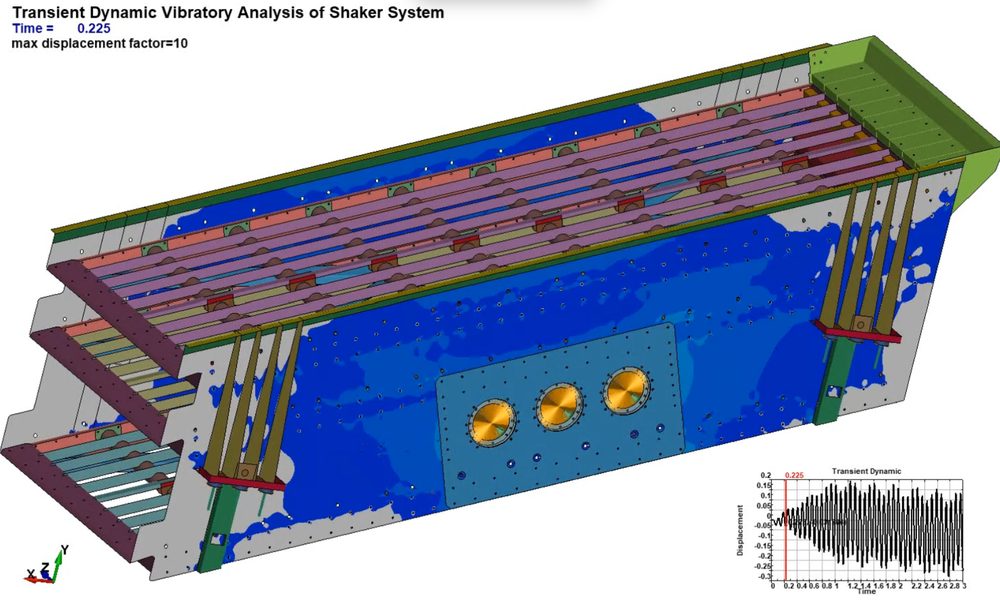
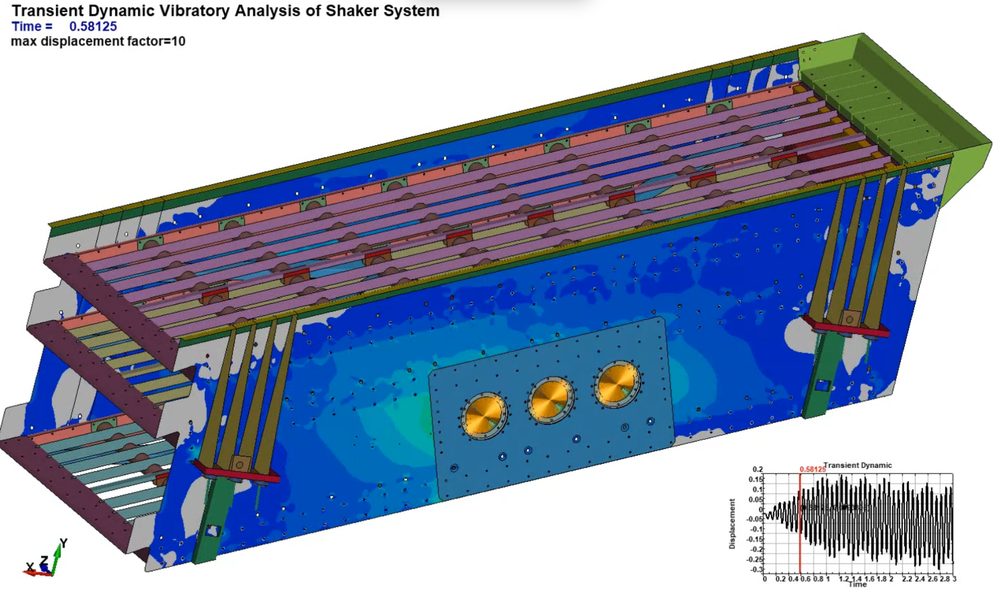
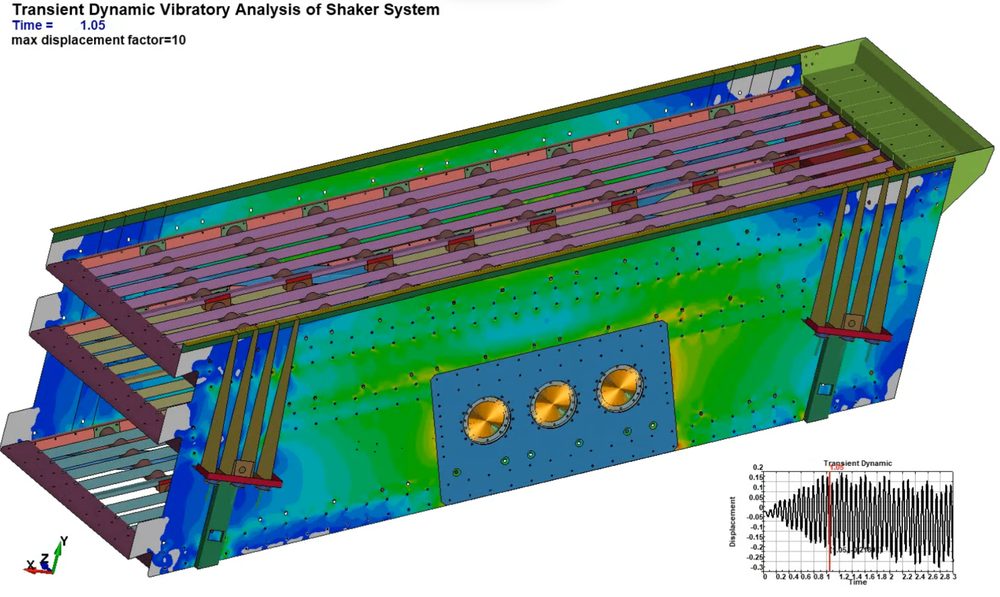
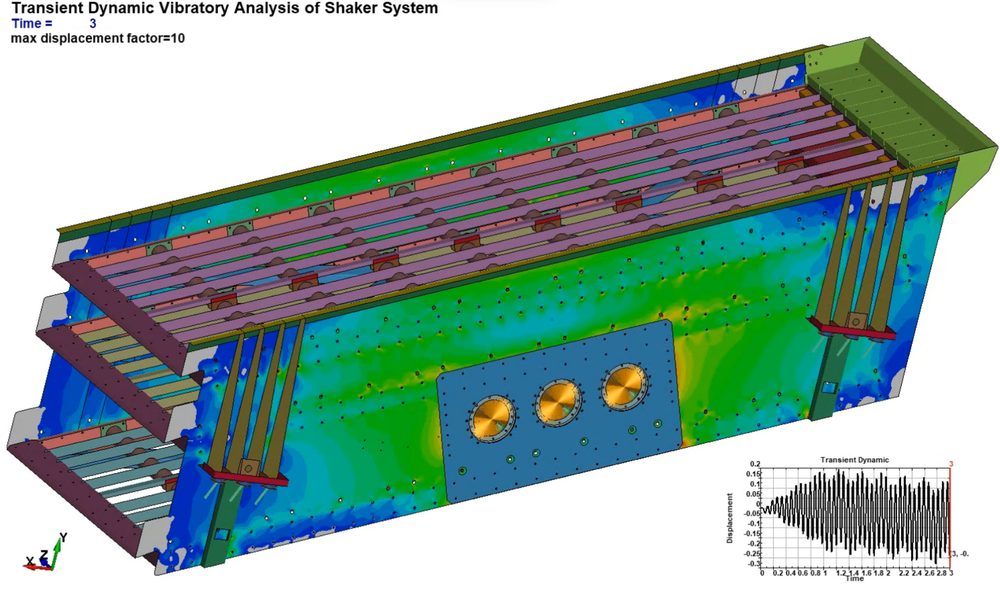
Predictive has over +20 years of FEA consulting experience with vibratory systems (linear and nonlinear). Our work has been benchmarked in the laboratory and validated in the field across multiple industries from food processing, mining and mineral processing, metrology equipment, precision scientific equipment and of course, aviation and space. Our clients come to us to get the right answer, quickly and on budget and schedule.
Predictive Engineering – The Advantage of Getting it Right the First Time