Vibration Analysis Fundamentals: How Fast We Forget the Basics
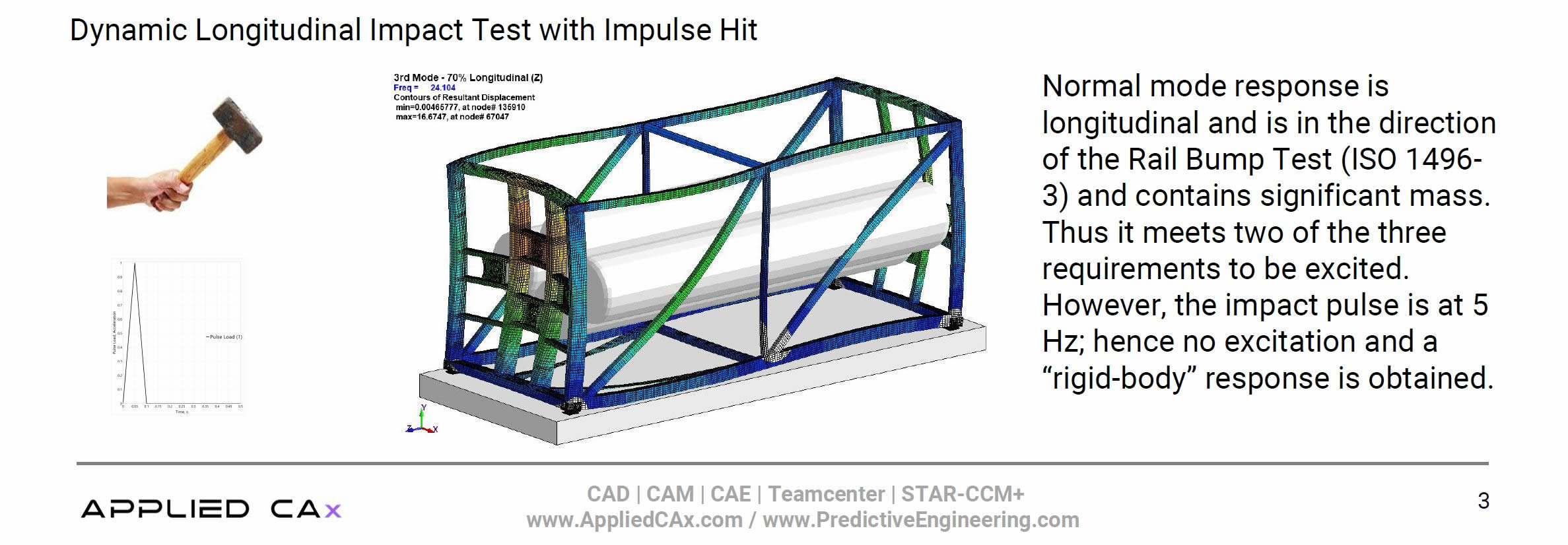
I like to say that if you are not grounded in the fundamentals—“knowing what you know”—then trying to understand more complex phenomena becomes a circular chase. My focus is on the mechanical performance of structures and systems, and from a vibration viewpoint, there are only three key concepts to consider: 1.) Its natural frequency and associated mass; 2.) Its mode shape; and 3.) How it will be excited (i.e., a time-varying load), which is broken down into frequency, phase, and direction.
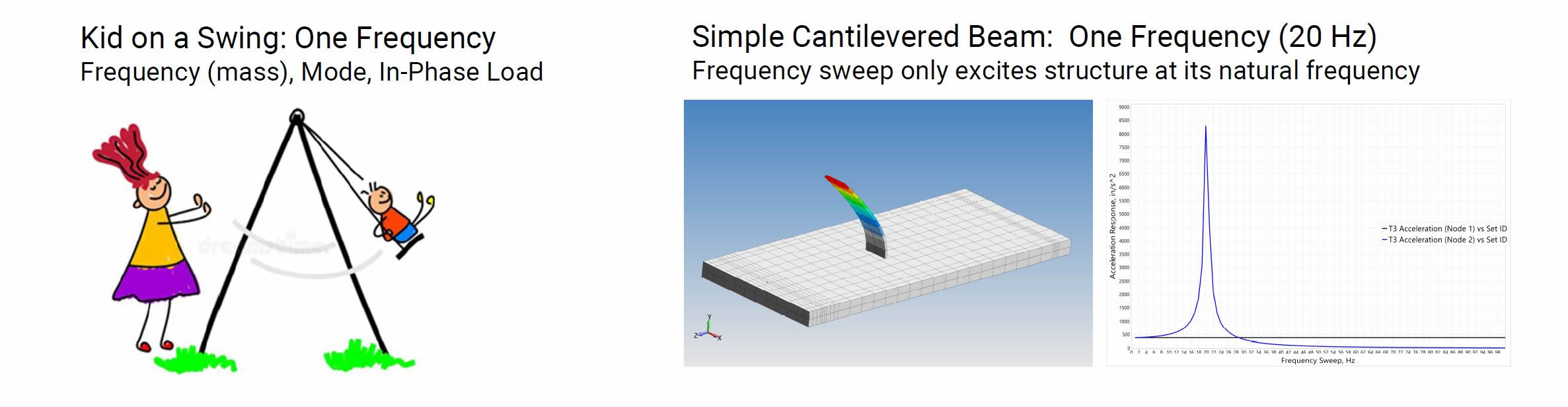
Let’s use a simple example to illustrate these points. A kid on a swing has a natural frequency associated with mass (the kid). Its mode shape is swinging back and forth. To make the kid swing higher, one needs to push in the direction of the mode shape (the principle of orthogonality—the mode shape aligns with the direction of the force) and push in phase—meaning at the right frequency and timing. This is a crucial concept. If one pushes while the kid is still moving toward them (180 degrees out of phase), the motion will slow down.
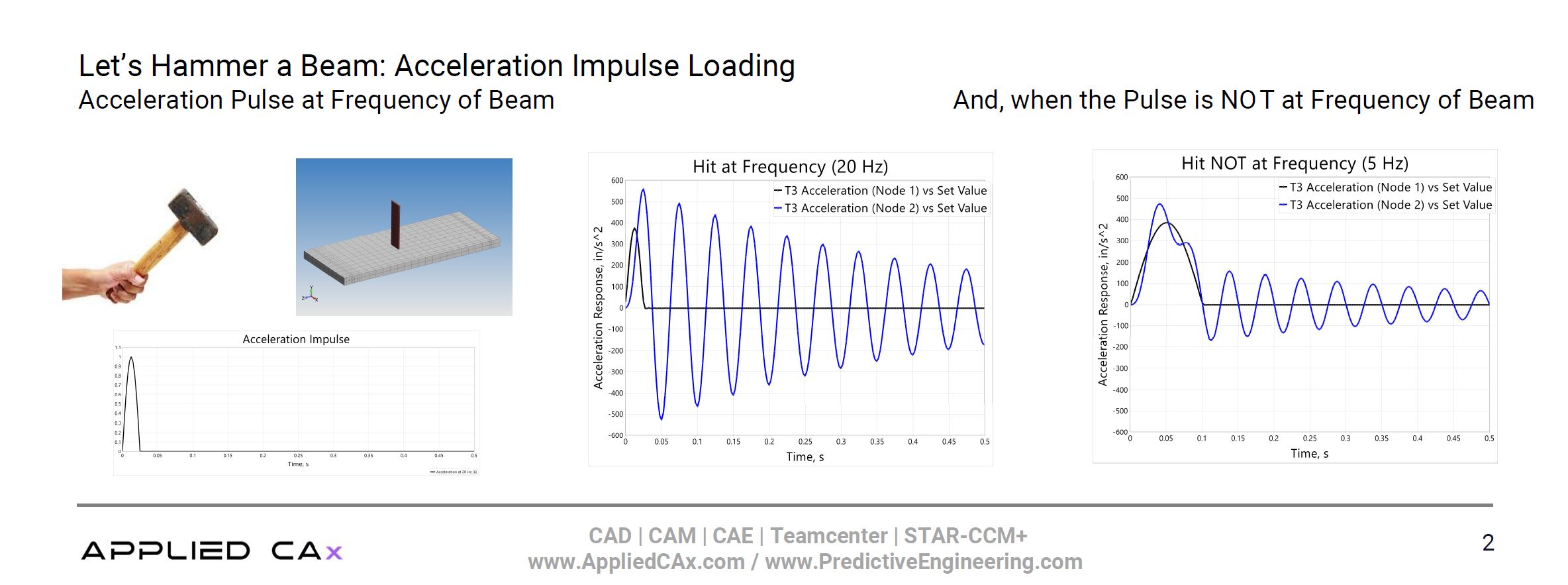
Thus, to excite a structure harmonically, the applied force must be aligned with the mode shape and in phase with its natural frequency. If these conditions are not met, then the structure remains static, with only a load applied. These concepts fundamentally explain why many structures do not experience harmonic excitation from transient loading conditions, even if the frequency matches that of the structure.
I understand that I am compressing a lot of information into a short explanation. For a more detailed read, take a look at my short articles on vibration at PredictiveEngineering.com. Why is understanding the basic concepts so important? In engineering mechanics, mastering the fundamentals will make you a hero. Let’s analyze another simple system and apply the principles to something more complex. All mechanical structures and systems have natural frequencies. If a time-varying load does not match these frequencies and is not aligned with the mode shapes, the load acts statically. In that case, it’s just a plain, simple, static load.
Returning to the kid on the swing example: If one pushes the kid sideways (at a right angle to their motion), even if the push is at the correct frequency and in phase, nothing happens—except for a static sideways force—because the force is not aligned with the mode shape. Applying this logic to the simplest example of a cantilevered beam, we see that it is only excited when the time-varying load matches its frequency. This principle is particularly important for impulse loading. If an impulse does not match the structure’s natural frequency, the response will be static, meaning the load will only equal the applied maximum impulse (in this case, acceleration).
Application in the Rail Industry
In the rail industry, a powerful technique has been developed for assessing the robustness of rail freight car transportation systems: ISO 1496-3, which applies to Series 1 freight containers. The test procedure involves striking a loaded rail car with sufficient force to exceed a defined Shock Response Spectrum (SRS) curve between 3 and 100 Hz. If the transportation frame remains serviceable and all contents intact, it meets the ISO 1496-3 specification. From an FEA consultant’s perspective, the key question is: How does one simulate this test? Please read on.
PDF Download - Predictive Engineering Vibration Analysis Fundamentals - FEA Consulting Services.
Vibration Basic Concepts: The Joy of Simplicity
Rail Transportation Analysis: ISO 1496-3, Part 6.6 Dynamic Longitudinal Impact Test
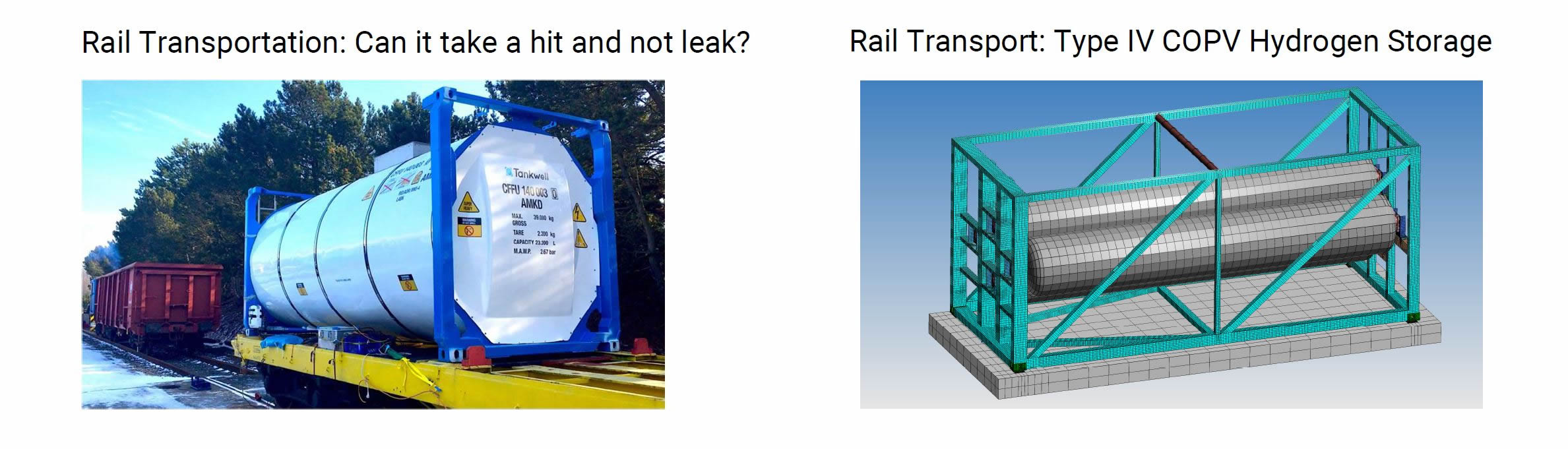
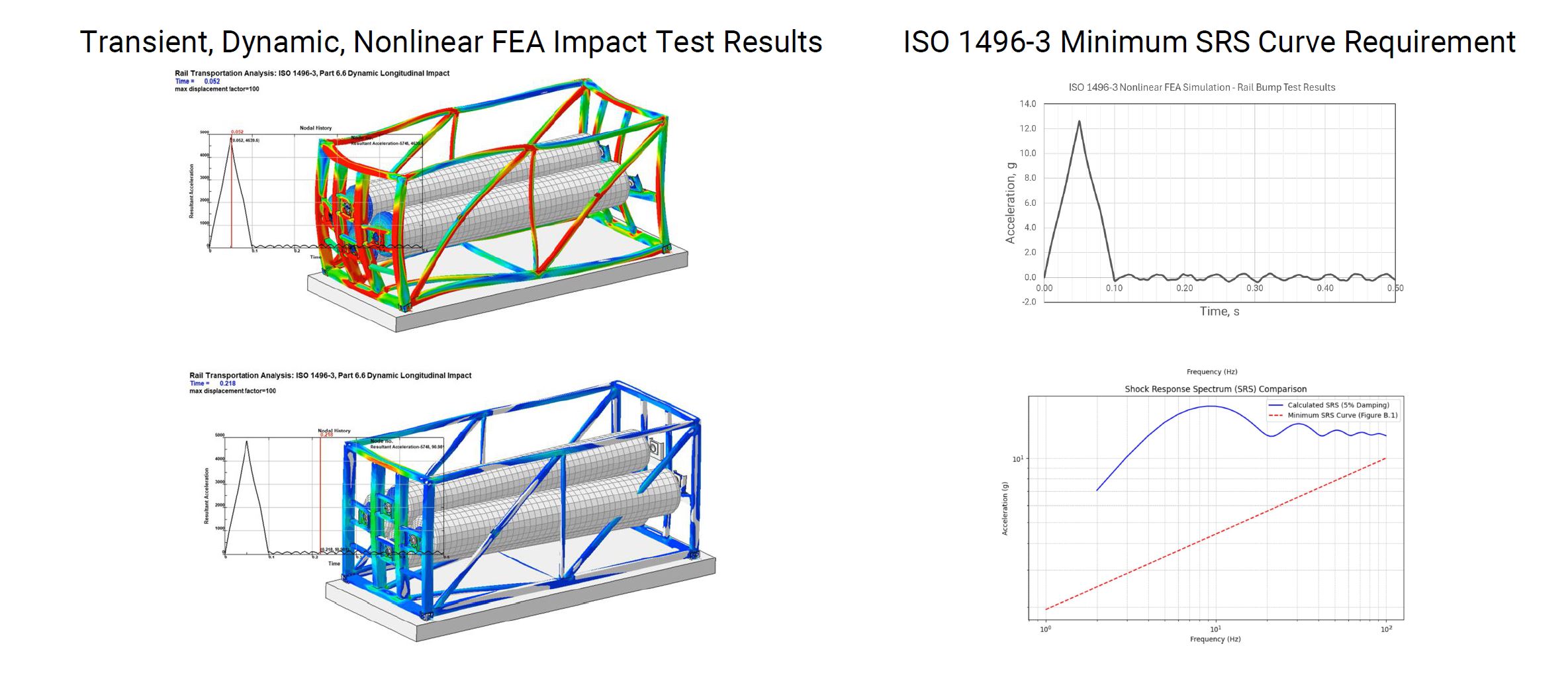
Data processing of the acceleration curve shows that the transportation frame experiences a shock response spectrum higher than the minimum curve and importantly nothing is damaged or permanently deformed. This simulation provides quantitative data that the frame will pass the ISO 1496-3, Part 6.6 Dynamic Longitudinal Impact Test.
Predictive Engineering – The Advantage of Getting it Right the First Time